
I’ve been following Jane Fraser career for years now, and here’s what strikes me most: she didn’t just break the glass ceiling on Wall Street. She shattered it while leading one of the world’s most complex financial institutions through a complete transformation.
When Fraser took the helm at Citigroup in March 2021, she became the first woman ever to lead a major Wall Street bank. Not the first woman at a regional bank or a boutique firm, but at one of the absolute giants of global finance.

What I’ve discovered studying her journey is that this wasn’t some token appointment or diversity checkbox. Jane Fraser earned her spot through three decades of proving herself in some of the toughest roles in banking. And she’s doing it while openly advocating for working parents and flexible work policies, which frankly, you don’t hear enough from executives at her level.
Early Life and Education
Scottish Roots and Academic Foundation
Fraser was born in 1967 in St. Andrews, Scotland. That’s the same town famous for its ancient university and golf courses, but Fraser had her sights set on something different. She headed to Girton College at the University of Cambridge, where she studied economics.
Here’s what I find interesting about that choice: Girton was one of Cambridge’s first women’s colleges, founded specifically because women weren’t allowed at other Cambridge colleges. There’s a certain symmetry there with her later career.
Harvard Business School and MBA
After working in London and Spain (more on that later), Jane Fraser made her way to Harvard Business School in the early 1990s. She completed her MBA in 1994, right as the financial services industry was entering a period of massive consolidation and globalization. The timing, I’ve noticed, positioned her perfectly to ride that wave upward.
Career Journey
Early Career: Goldman Sachs and McKinsey
Fraser started her career at Goldman Sachs in London from 1988 to 1990, working in mergers and acquisitions. That’s where you learn the language of high finance and how deals actually get done. But here’s a move that I think reveals something important about her character: she left Goldman to work at a consultancy in Spain.
Why Spain? She wanted to learn Spanish. In my research, I’ve found this is a pattern with Fraser. She makes strategic career moves that others might see as lateral or even backward, but she’s always building specific skills for the long game. That Spanish fluency became crucial when she later ran Citigroup’s Latin American operations, one of the bank’s most important markets.
After Harvard, she joined McKinsey & Company in New York. Now, McKinsey is where corporate America’s future leaders cut their teeth on strategy. Fraser rose to partner shortly after having her first child. Let that sink in for a moment.
Most people would be happy just surviving the partner track at McKinsey. She did it while becoming a mother, which tells you something about her capacity for managing competing priorities.
Joining Citigroup in 2004
In 2004, Jane Fraser made the jump from consulting to banking when she joined Citigroup. I’ve noticed that consultants who transition to industry either flame out quickly or become exceptional operators. Fraser fell into the latter category. She understood how to diagnose problems (the consultant skill) and actually fix them (the operator skill).
Rising Through the Ranks
CEO of Citi Private Bank
Jane Fraser first major leadership role at Citi was running the Private Bank, which serves ultra-high-net-worth clients. This is where you manage relationships with people who have tens or hundreds of millions to invest. It’s a business built entirely on trust and discretion.
What I’ve learned from studying this period is that Fraser developed a reputation for really listening to clients, understanding their needs beyond just the financial products.
CEO of Citi Latin America
Here’s where that Spanish language investment paid off. Jane Fraser took over Citi’s Latin American operations at a time when the region was both incredibly important to the bank and incredibly complex to navigate. We’re talking about managing operations across countries with wildly different regulatory environments, political situations, and economic cycles.
According to Citigroup’s own investor materials, Latin America represents a significant portion of their international consumer banking franchise. Fraser grew that business while maintaining strong relationships with government officials and business leaders across the region.
President of Global Consumer Banking
In 2019, Fraser was named President of Citigroup and CEO of Global Consumer Banking. This was the big leagues. She was overseeing consumer banking operations in 19 countries, managing everything from credit cards to retail banking to wealth management. The role put her in charge of thousands of employees and billions in revenue.

What I’ve discovered from reading her interviews from this period is that she was already thinking about what needed to change at Citi. The bank had grown through acquisitions and had become unwieldy. Different divisions operated almost like separate companies. Fraser was already developing the transformation plan she’d later implement as CEO.
Historic Appointment as Citigroup CEO
Breaking Barriers in 2021
On March 1, 2021, Jane Fraser officially became CEO of Citigroup. I remember the announcement because it made headlines everywhere, and for good reason. Here’s the stunning fact: by 2021, we’d had women lead countries, run Fortune 500 companies in tech and retail and pharmaceuticals, but never a major Wall Street bank.
First Female CEO of a Major Wall Street Bank
The “Big Four” U.S. banks (JPMorgan Chase, Bank of America, Citigroup, and Wells Fargo) had been led exclusively by men for their entire histories. Fraser changed that. What strikes me about her appointment is that she didn’t downplay the historic nature of it. She acknowledged it, celebrated it, and then got to work.
She’s been quoted as saying she received advice when becoming CEO to “have big ears and thick skin.” In my observation, that’s exactly what the job requires. You need to listen to everyone (shareholders, regulators, employees, customers) while also being able to handle criticism from all those same groups.
Leadership and Vision
Transformation Strategy
Fraser inherited a bank that needed serious work. Citigroup had underperformed its peers for years, struggled with regulatory issues, and had a sprawling global footprint that didn’t always make strategic sense. Here’s what I’ve learned about her approach: she didn’t try to do everything at once. She identified clear priorities and moved decisively.
Streamlining Operations
The first major move was to exit consumer banking in 13 markets across Asia and Europe, including countries where Citi had operated for decades. This wasn’t expansion; this was contraction. Fraser made the tough call to focus resources where Citi could actually win rather than trying to be everywhere.
According to reports from the Federal Reserve, Citi had been operating under consent orders related to risk management and internal controls. Jane Fraser made fixing these issues a top priority, even though it meant spending billions on technology and compliance infrastructure that doesn’t directly generate revenue.
Enhancing Digital Capabilities
I’ve noticed that Jane Fraser talks constantly about technology and digital transformation. She understands that banking is increasingly about software and data, not just branches and bankers. Under her leadership, Citi has invested heavily in modernizing its technology stack, particularly in areas like treasury and trade solutions, where it serves corporate clients.
Refocusing on Core Strengths
Here’s what Fraser decided Citi should be: a global bank focused on serving multinational corporations and institutional clients, with select consumer banking franchises in the United States and key international markets like Mexico. Everything else? Either exit or sell.
This is harder than it sounds. Banks are notoriously bad at simplifying themselves because every business line has defenders who argue it’s strategically important. Fraser cut through that.
Leadership Style and Philosophy
Empathy and Resilience
What I find most interesting about Jane Fraser leadership style is how openly she talks about the challenges of balancing career and family. She’s said that “being a mother of young children and having a career is the toughest thing I have ever had to do.”
Most CEOs, especially men, don’t talk like this. They present themselves as having it all figured out, as if work-life balance is just a matter of time management. Fraser is different. She’s candid about the difficulty, which actually makes her more credible, not less.
Advocating for Working Parents
Fraser has backed up her words with policy. Under her leadership, Citi has maintained flexible work arrangements even as other Wall Street banks have demanded full-time office returns. As of 2025, she was still publicly supporting hybrid work models, particularly for working parents.
This isn’t just nice talk. According to research from institutions like Harvard Business School, flexible work policies are one of the most effective tools for retaining talented women in demanding careers. Fraser gets this.
Flexible Work Policies
Here’s what I’ve observed: Jane Fraser announced in early 2021, right as she became CEO, that Citi would adopt a hybrid model with most employees working three days in the office and two days remotely. This was before it was clear whether the pandemic changes to work would stick.
She took heat from some quarters for this. Critics argued that banking culture requires face time, that young employees need mentoring, and that creativity happens in person. Fraser held firm. She told investors and employees that Citi needed to compete for talent, and talent increasingly valued flexibility.
Compensation and Net Worth 2026
Executive Compensation Overview
Let’s talk money, because Jane Fraser compensation has been a topic of both celebration and controversy. In 2024, according to SEC filings, she received total compensation of approximately $31.1 million, consisting of a $1.5 million base salary, a $4.95 million bonus, and about $24.7 million in stock awards.
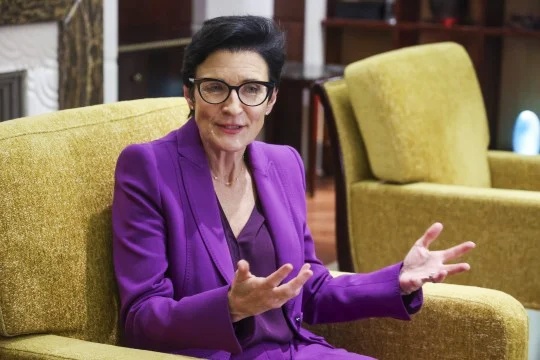
That jumped to $34.5 million in 2026, reflecting what the board described as successful progress on her transformation strategy. Now, here’s where it gets interesting: in 2023, she received a 6% pay increase to $26 million even though Citigroup’s profits had dropped 38% that year.
Critics pounced on this, arguing that CEOs shouldn’t get raises when results decline. Defenders pointed out that the profit drop was due to one-time charges related to the exits Fraser was orchestrating, and that underlying business performance was improving.
I’ve found this is a common tension with transformation strategies. You often have to take short-term pain for long-term gain, but shareholders and the public don’t always have patience for that.
Net Worth Estimates and Variations
Here’s where things get fuzzy. I’ve seen Jane Fraser net worth estimated anywhere from $8 million to $120 million, depending on the source and methodology. The lowest estimates focus solely on her documented stock holdings. The highest estimates include assumptions about her total accumulated wealth from decades of high compensation, real estate, and other investments.
What I can tell you with certainty is that as of late 2024, SEC filings showed Fraser owned at least 109,665 shares of Citigroup stock. With Citi trading around $100 per share, that’s approximately $11 million in stock alone. But that number hasn’t been updated since 2018 in some databases, which makes it potentially unreliable.
Stock Holdings in Citigroup
The challenge with estimating executive net worth is that much of their compensation comes in restricted stock that vests over time. Fraser receives millions in stock awards annually, but she can’t immediately sell all of it. There are vesting schedules, holding requirements, and blackout periods.
What I’ve discovered is that her most recent stock sales, according to available records, were in 2017 and 2018 when she sold about 67,400 shares total for roughly $4.6 million. Those were likely sales to cover taxes on vesting stock or to diversify her holdings, standard practice for executives.
Recent Developments and News
2026 Compensation Increase
Fraser’s compensation jumped from $31.1 million in 2024 to $34.5 million in 2026. The Citigroup board justified this increase by pointing to progress on the bank’s simplification strategy, improved financial performance, and successful navigation of a challenging regulatory environment.
Here’s my take: CEO compensation is always controversial, especially at banks. People remember the financial crisis and banker bailouts. They see these numbers and feel anger. I get it. But in the context of Wall Street CEO pay, Fraser is actually not the highest paid. JPMorgan’s Jamie Dimon, for instance, has made significantly more in recent years.
International Relations and Economic Collaboration
In April 2026, Fraser met with Mexican President Claudia Sheinbaum to discuss economic collaboration. This caught my attention because it shows how Fraser operates. Mexico is Citi’s largest consumer banking market outside the United States. The bank owns Banamex, one of Mexico’s largest banks.
Rather than delegating this relationship to subordinates, Fraser personally maintains these connections at the highest levels. That’s strategic relationship management, and it’s part of why she’s effective.
Commitment to Workplace Flexibility
As of May 2025, Fraser was still publicly defending Citi’s hybrid work policies despite pressure from some quarters to return to pre-pandemic norms. She’s made the argument that flexibility is particularly important for working mothers, and that Citi’s policies help the bank attract and retain talented women.
I’ve noticed this has become something of a signature issue for her. She’s not just implementing a policy; she’s making a values statement about what kind of workplace Citi should be.
Recognition and Influence
Awards and Rankings
Fraser regularly appears on lists like Forbes’ “Most Powerful Women in the World” and Fortune’s “Most Powerful Women in Business.” These rankings matter because they signal influence beyond just her role at Citi.
She’s become a voice on issues ranging from financial regulation to workplace policy to economic development in emerging markets. What I find interesting is how she’s used this platform. She’s not just accepting awards and moving on.
She’s actively advocating for more women in finance, for regulatory frameworks that make sense, for economic policies that support growth in developing markets where Citi operates.
Board Memberships and External Roles
Fraser serves on several influential boards. Jane Fraser member of the Business Roundtable, an association of CEOs from America’s leading companies that collectively employ millions of people. She’s on the board of the Council on Foreign Relations, one of the most prestigious foreign policy organizations in the world.
She’s involved with the Partnership for New York City, which focuses on economic development and policy issues affecting the city. These aren’t honorary positions. They’re real commitments that shape policy debates and business practices. Through these roles, Fraser has influence that extends well beyond Citigroup’s walls.
Personal Life
Family and Work-Life Balance
Fraser is married to Richard Thompson, who previously worked as an executive at McKinsey. They have two children together. What strikes me about Fraser’s approach to discussing her personal life is her honesty about the challenges.
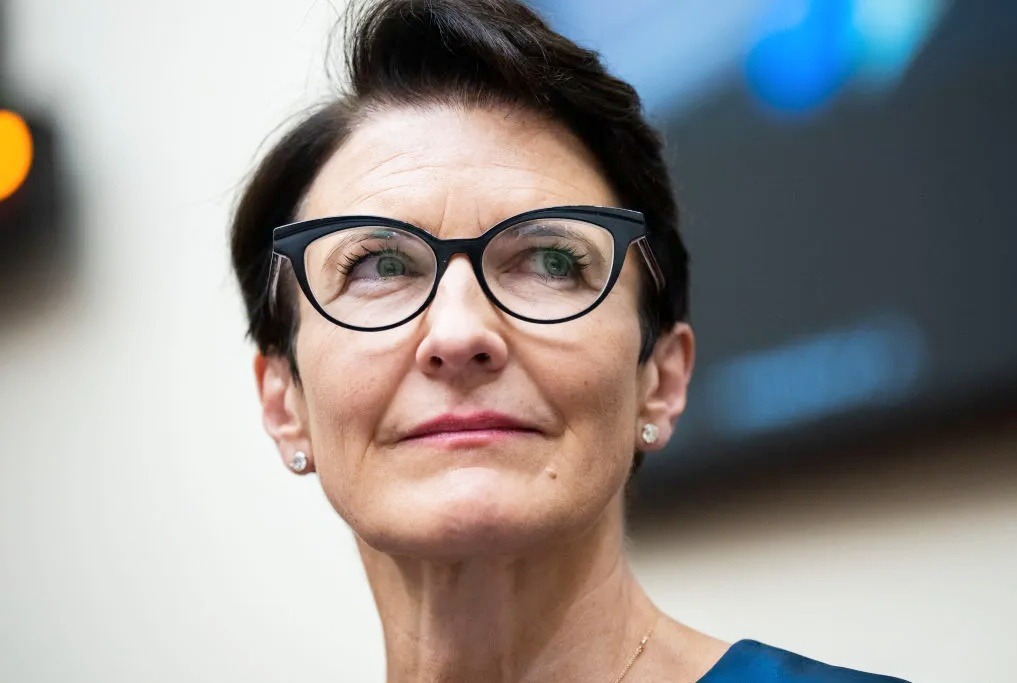
She’s said that becoming a mother actually made her better at her job because she learned to prioritize more effectively and became more empathetic with clients facing similar challenges. That’s a reframing that I think is valuable. Instead of treating parenthood as something that makes you less focused on your career, she argues it can make you more effective by forcing you to be strategic about where you spend your energy.
Life in New York City
Fraser lives in New York City, where Citigroup is headquartered. Beyond that, she keeps details of her personal life private. I’ve noticed she doesn’t do lifestyle interviews or show up in society pages. She maintains clear boundaries between her public role and her private life, which is increasingly rare for people at her level of visibility.
Legacy and Impact
Inspiration for Women in Finance
Here’s what I think Fraser’s biggest impact will be: she’s proved it can be done. Before her, young women entering finance could look up and see that no woman had ever led a major Wall Street bank. They could reasonably wonder if there was an invisible ceiling they’d eventually hit.
Jane Fraser broke that. Now, when women enter banking or finance, they can point to her and say, “She did it, so it’s possible.” That psychological shift matters more than people might realize.
Influence on Corporate Culture
Beyond the gender barrier, Fraser is influencing how corporations think about work. Her advocacy for flexible arrangements, her openness about the challenges of balancing career and family, her emphasis on empathy in leadership—these are reshaping expectations, especially at traditional institutions like big banks.
I’ve watched other financial services CEOs start to adopt similar language and policies. Some of that would have happened anyway due to generational shifts and the pandemic, but Fraser has accelerated it by showing that a major bank can operate this way and still be competitive.
Conclusion
Jane Fraser story is still being written. She took over Citigroup in 2021, which means she’s only a few years into what could be a decade-long tenure. The transformation strategy she’s implementing will take years to fully play out. We won’t know for some time whether her simplification strategy succeeds, whether Citi can consistently outperform its rivals, or whether the cultural changes she’s advocating become permanent.
But here’s what I know for certain: Fraser has already changed what’s possible. She’s shown that a woman can lead a major Wall Street bank, that flexible work policies can coexist with high performance, and that empathy can be a strength rather than a weakness in corporate leadership.
Her net worth, whether it’s $50 million or $120 million, matters less than the doors she’s opened and the paths she’s cleared for the people coming behind her. That’s the real measure of her impact, and it will compound over time as more women see what she’s accomplished and believe they can do it too.
I’ll be watching to see how the next chapter unfolds. If her first few years are any indication, it’s going to be fascinating.
