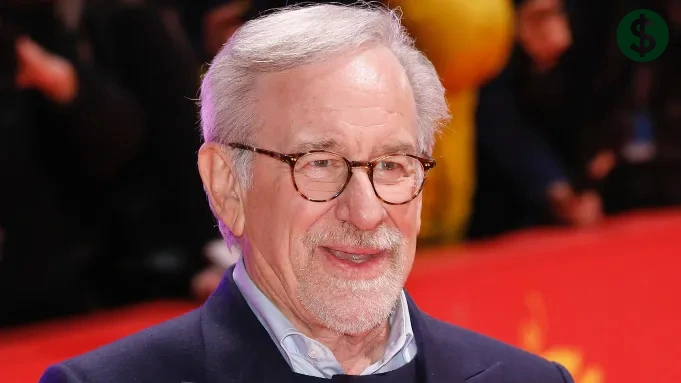
Steven Spielberg isn’t just a legendary filmmaker. He’s a financial empire unto himself. With a Steven Spielberg net worth hovering between $9.5 and $10 billion in 2025, he’s managed to do what most directors only dream about: turn creative genius into generational wealth. That puts him at the very top of the entertainment world’s financial pyramid, even surpassing his close friend George Lucas.
Here’s what makes Spielberg’s story fascinating: he didn’t inherit this fortune or stumble into tech at the right moment. He built it frame by frame, deal by deal, over five decades of making movies that changed how we think about cinema. From “Jaws” to “Jurassic Park” to “Schindler’s List,” every film added another layer to both his legacy and his bank account.
The man has directed films that collectively grossed over $10.75 billion worldwide. That’s not a typo. He’s the highest-grossing director in cinema history, and the gap between him and second place (the Russo Brothers at $6.84 billion) is massive. But the real genius wasn’t just making hit movies. It was how he structured his deals, negotiated his contracts, and built multiple income streams that continue paying out decades later.
Steven Spielberg Net Worth in 2025
Current Valuation: $9.5-$10 Billion
Different sources place Steven Spielberg net worth slightly differently. Forbes estimates it at $7.1 billion. Celebrity Net Worth puts it at $10 billion. Most recent assessments settle around $9.5 billion. These variations reflect the difficulty of valuing someone with complex, long-term revenue streams from multiple sources.

What’s not in dispute: he’s extraordinarily wealthy by any measure. His annual income is estimated at around $150 million, though this can vary significantly depending on film releases, theme park attendance, and other factors.
Comparison to Other Entertainment Moguls
Spielberg stands as the wealthiest celebrity in the world according to most rankings, just ahead of his friend George Lucas, whose Steven Spielberg net worth is estimated at around $5.5 billion (largely from selling Lucasfilm to Disney for $4.05 billion in 2012).
For context, other entertainment industry billionaires include:
- Oprah Winfrey (estimated $2.8 billion)
- Tyler Perry (estimated $1 billion)
- Jay-Z (estimated $2.5 billion)
- Rihanna (estimated $1.4 billion)
What separates Spielberg from most of this list is that his wealth comes almost entirely from filmmaking and related activities, not from diversifying into beauty products, streaming services, or music. He made movies and built business structures around those movies that continue generating wealth decades later.
How Steven Spielberg Built His Fortune
Film Earnings and Backend Deals
The Jurassic Park Payday
Spielberg approach to compensation evolved dramatically after his early successes. Rather than demanding huge upfront salaries, he typically takes a relatively modest $10 million directing fee. The real money comes from backend deals: a percentage of the gross revenue (not net profits, which can be manipulated through Hollywood accounting).
His deal on “Jurassic Park” exemplifies this strategy. That relatively small upfront fee turned into approximately $250 million from backend points as the film became a global phenomenon. Adjusted for inflation, that’s roughly $360 million in today’s dollars. From a single film.
Even better, his deal structure extended to the sequels. He made at least $150 million from “The Lost World: Jurassic Park” (1997) and $75 million from “Jurassic Park III” (2001), despite not directing that third installment. That’s the power of owning points on a franchise rather than just getting paid per film.
Upfront Salary vs. Profit Participation
This strategy requires confidence and leverage. Early in his career, Spielberg couldn’t have demanded such deals. But after “Jaws” and “E.T.,” he had the clout to negotiate from a position of strength. Studios accepted these terms because they knew a Spielberg film had a much higher chance of success than most projects.
The math works beautifully for everyone involved when a film succeeds. The studio gets a motivated director who has skin in the game and a financial incentive to make the film as successful as possible. Spielberg gets to share in the upside when his films perform well.
When films underperform, like “West Side Story,” Spielberg still gets his $10 million directing fee, which softens the blow. It’s a risk-reward structure that has paid off handsomely over decades.
The Schindler List Exception
The one major exception to Spielberg compensation strategy was “Schindler’s List.” He refused any payment whatsoever, considering it inappropriate to profit from a film about the Holocaust. Every dollar that would have gone to him instead went to founding and funding the USC Shoah Foundation, which has recorded over 55,000 testimonies from Holocaust survivors and witnesses in 65 countries and 43 languages.
This decision cost him tens of millions in immediate income and potentially hundreds of millions in lifetime earnings from the film. But it earned him something more valuable: moral authority and respect that money can’t buy.
The Universal Theme Parks Deal
Origins of the 1987/1993 Agreement
Here’s where Spielberg’s story gets really interesting from a business perspective. In 1987, MCA (Universal’s parent company at the time) was preparing to launch Universal Studios Florida. Warner Bros. was aggressively trying to lure Spielberg away with a massive cash offer. MCA couldn’t match Warner’s upfront money, so MCA president Sid Sheinberg got creative.
Sheinberg offered Spielberg a consulting role on theme park attractions based on his films. The compensation: 2% of gross ticket sales (not profits) from Universal Studios Florida, plus a cut of concession revenue. Most significantly, the deal was perpetual—it would continue forever.
When Universal Studios Florida opened in 1990, Spielberg began collecting a percentage from every single ticket sold. As the park proved successful and Universal expanded internationally, the deal’s scope grew to include most new parks (though Universal Studios Hollywood was notably excluded).
2% of Gross Ticket Sales: A Perpetual Goldmine
The brilliance of this deal is in the details. Gross revenue means Spielberg gets paid before Universal deducts expenses, marketing costs, or anything else. There’s no Hollywood accounting that can reduce what he’s owed. Two percent of the top line, calculated quarterly, paid automatically.
A typical Universal Studios theme park ticket costs around $119 in 2025. That means Spielberg earns approximately $2.38 from every ticket sold at participating parks. With an estimated 25 million tickets sold annually across all eligible Universal parks worldwide, that’s $60 to $70 million per year. Every year. Forever.
Consider what this means: even if Spielberg never directs another film, never produces another project, never does another day of actual work, he’ll continue earning tens of millions annually from theme park tickets. It’s a masterclass in building passive income at scale.
Annual Earnings from Theme Parks
The financial details remained closely guarded until 2009, when a legal dispute between DreamWorks and Disney forced disclosure of certain financial arrangements. Court documents revealed Spielberg had been earning roughly $30 million per year from what Universal labeled “consulting fees.”
By 2017, as Universal opened parks in Singapore and expanded operations in Japan, those payments had grown to approximately $50 million annually. With the opening of Universal Beijing Resort in 2021 and continuing expansion plans, the annual figure has likely reached $60 to $70 million or more.
The Comcast Buyout Clause
When Comcast acquired NBCUniversal in 2011, it inherited Spielberg’s perpetual contract, which included a buyout clause. Beginning in 2010, Spielberg had the right to demand a one-time lump-sum payment equal to the projected lifetime value of his royalties.
In 2009, the buyout amount was estimated at $300 to $500 million. By 2017, with multiple new parks generating revenue, the potential buyout cost had ballooned to somewhere between $1 to $2 billion. Universal, which was carrying significant debt at the time, was desperate to avoid triggering the clause.
Spielberg initially ignored their outreach. Then he agreed to delay his buyout option to 2017 in exchange for expanded royalty rights covering all new parks under development and a guarantee that his payments would continue regardless of ownership changes.
When 2017 arrived, Spielberg again declined to exercise the buyout option. Instead, he negotiated a new arrangement where Comcast took a stake in his film studio, Amblin Partners, valued at over $1 billion. This gave him both the continuing royalty stream and a large equity investment in his production company.
The decision to maintain the perpetual stream rather than taking a lump sum speaks to Spielberg’s long-term thinking and financial sophistication. At current rates, he’ll collect more from the continuing payments than any realistic buyout amount, and his heirs will continue collecting after he’s gone.
The Star Wars Bet with George Lucas
A Friendly Wager in the 1970s
During the production of “Star Wars” in the mid-1970s, George Lucas was convinced his passion project would bomb. The studio was skeptical. The budget kept climbing. Nothing like it had been attempted before. At the same time, Spielberg was filming “Close Encounters of the Third Kind,” which had similar challenges and uncertainty.
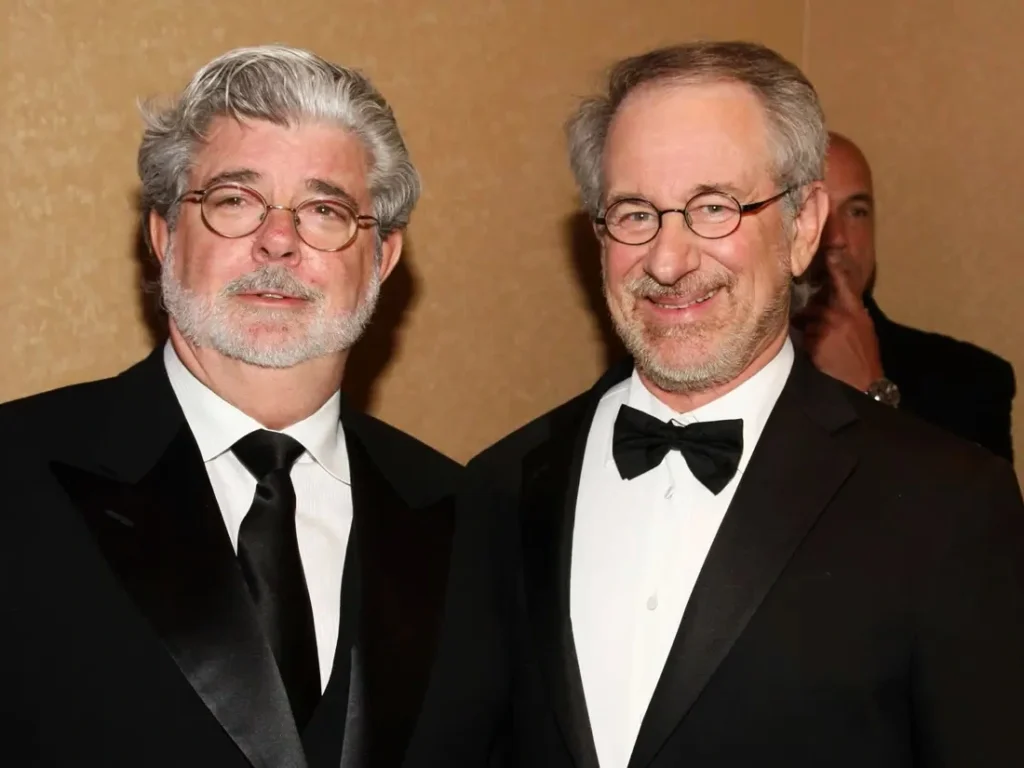
In a moment that would become Hollywood legend, Lucas approached Spielberg with an unusual proposition. As Spielberg later recounted: “He said, ‘You want to trade some points? I’ll give you two and a half percent of ‘Star Wars’ if you give me two and a half percent of ‘Close Encounters.’ I said, ‘Sure, I’ll gamble with that, great.'”
Ongoing Royalties from a Franchise He Never Touched
“Close Encounters” was a significant hit, earning over $300 million worldwide. But “Star Wars” was a phenomenon that transcended cinema, grossing billions globally and spawning one of the most valuable media franchises in history. The original 1977 film alone has generated over $775 million in theatrical revenue, not counting rereleases, home video, streaming, merchandise, or any of the sequels.
Steven Spielberg net worth 2.5% share has generated a small fortune over the decades. While the exact amount isn’t publicly disclosed, conservative estimates place his lifetime earnings from “Star Wars” in the tens of millions, possibly exceeding $100 million when accounting for all the ways the franchise generates revenue.
The beautiful irony: Lucas bet against himself and lost. Spielberg, showing remarkable faith in his friend’s vision despite Lucas’s own doubts, won without ever setting foot on a “Star Wars” set. It’s a testament to their friendship that the bet stands to this day, with Spielberg continuing to collect royalties from every new “Star Wars” release and related revenue stream.
Co-Founding Amblin Entertainment and DreamWorks
Building a Production Empire
In 1981, fresh off the success of “Raiders of the Lost Ark” and just before “E.T.” became the highest-grossing film ever made, Spielberg co-founded Amblin Entertainment with producers Kathleen Kennedy and Frank Marshall. The name came from his early short film that had launched his career.
Amblin became a prolific production company, creating or co-producing films beyond Spielberg’s directorial projects. Major hits include “Back to the Future,” “Who Framed Roger Rabbit,” “The Goonies,” “Gremlins,” and many others. Each successful production generated additional revenue streams for Spielberg as a co-founder.
DreamWorks Animation Success
In 1994, riding high after “Jurassic Park” became the first billion-dollar film, Spielberg co-founded DreamWorks Pictures with Jeffrey Katzenberg (former Disney executive) and music mogul David Geffen. The studio produced diverse successful films, including “Gladiator,” “American Beauty,” “The Ring,” and Spielberg’s own “Minority Report.”
DreamWorks Animation, a division of the company, became particularly successful with franchises like “Shrek,” “Madagascar,” “Kung Fu Panda,” and “How to Train Your Dragon.” These animated films have collectively grossed billions worldwide and continue generating revenue through sequels, streaming deals, and merchandise.
The various sales, restructurings, and ownership changes of DreamWorks over the years have generated significant payouts for Spielberg while allowing him to maintain creative control through Amblin Partners, his current production banner.
Universal Studios Consulting Fees
Beyond the theme park percentage, Spielberg maintains a formal consulting arrangement with Universal Studios. This involves input on attractions, park design, and strategic decisions related to intellectual property. The consulting generates an additional $30 million or more annually, separate from his ticket revenue percentage.
This arrangement gives Universal access to Spielberg’s creative insight and industry knowledge while providing him with yet another substantial income stream. It’s a win-win that has lasted nearly four decades and shows no signs of ending.
Early Life and Career Beginnings
Childhood and First Films
Steven Spielberg was born on December 18, 1946, in Cincinnati, Ohio, to parents who couldn’t have been more different. His mother, Leah, was a concert pianist with an artistic soul. His father, Arnold, was an electrical engineer helping develop early computers. That combination of art and logic would define Spielberg’s entire approach to filmmaking.
The family moved around during his childhood, from Haddon Heights, New Jersey, to Scottsdale, Arizona. It was in Scottsdale where young Steven discovered his calling. At age 12, he filmed his first movie: a train wreck starring his toy Lionel trains. Even then, he had the entrepreneurial spirit that would serve him well later. He charged neighborhood kids 25 cents to watch his creations.
By 13, he’d won an award for “Escape to Nowhere,” a 40-minute war film that showed remarkable sophistication for someone barely in his teens. At 16, he created his first feature-length film, “Firelight,” a sci-fi story that would eventually inspire “Close Encounters of the Third Kind.” He even screened it at a local cinema, getting his first taste of seeing an audience react to his work on the big screen.
Rejection and Persistence
Here’s where Spielberg’s story takes an interesting turn. After graduating from Saratoga High School in California, he applied to the University of Southern California’s prestigious School of Theater, Film, and Television. They rejected him. So he applied again. Rejected. He tried a third time. Rejected again.
Three rejections from the school that would eventually name a building after him. That’s the kind of irony that defines Hollywood success stories.
Instead of giving up, Spielberg enrolled at California State University, Long Beach. He joined the Theta Chi Fraternity and kept making films. In 1968, he directed a 24-minute short called “Amblin'” that would change everything. The film caught the attention of Sidney Sheinberg, Vice President of Production at Universal’s television division.
Breaking Into Hollywood
Sheinberg offered Spielberg something unprecedented: a seven-year contract with Universal, making him the youngest director ever to sign a long-term deal with a major studio. Spielberg was so eager to seize the opportunity that he dropped out of college immediately. He’d eventually return in 2002 to complete his BA in Film and Electronic Arts, but by then, he hardly needed the credentials.
During his early years at Universal, Spielberg directed television episodes for shows like “Night Gallery,” “Columbo,” and “Marcus Welby, M.D.” These weren’t just learning experiences; they were masterclasses in visual storytelling under tight budgets and tighter deadlines. In 1971, he directed “Duel,” a made-for-TV thriller about a motorist terrorized by an unseen truck driver. The film was so good that it got a theatrical release in Europe and established Spielberg as a director with serious potential.
His first theatrical feature came in 1974 with “The Sugarland Express,” starring Goldie Hawn. Critics praised it. But commercial success remained just out of reach. That was about to change in a big way.
Rise to Fame: The Blockbuster Years
Jaws: The First Summer Blockbuster
In 1975, everything shifted. “Jaws” hit theaters and became a cultural earthquake. Over 67% of Americans went to see it, making it the first true summer blockbuster and changing Hollywood’s release strategy forever. Before “Jaws,” studios dumped their weaker films in the summer months. After “Jaws,” summer became prime real estate for big-budget spectacles.
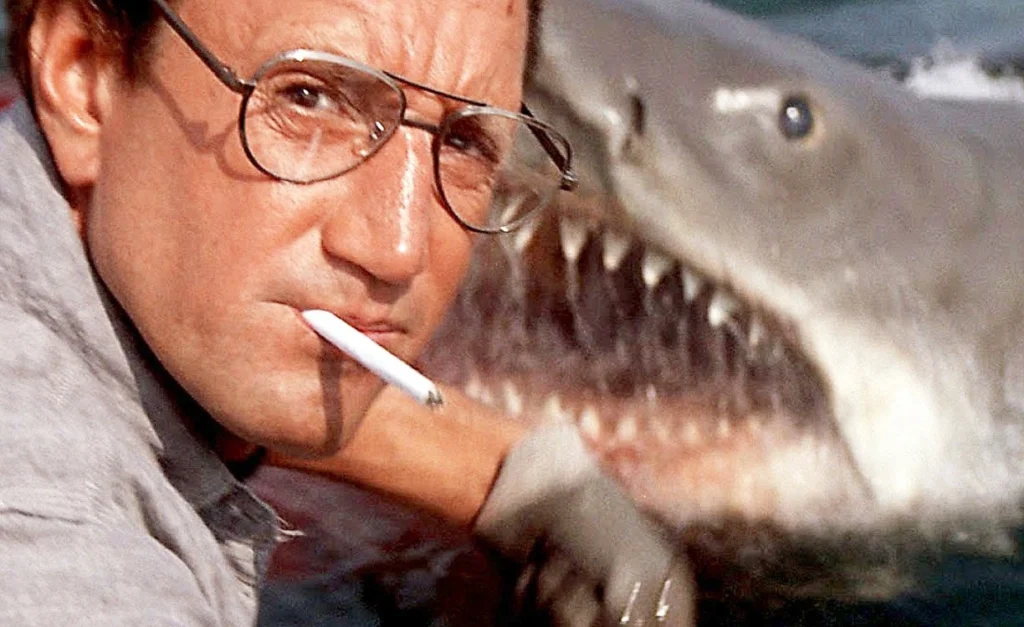
The production was famously difficult. The mechanical shark rarely worked. The ocean was unpredictable. The budget ballooned. The shoot ran over schedule. Spielberg later said he thought the film would end his career before it really began. Instead, it made him the most sought-after director in Hollywood practically overnight.
“Jaws” grossed $477.9 million worldwide against a $9 million budget. That’s a return of over 5,000%. For context, Spielberg wasn’t yet established enough to command huge fees, so he likely earned a small percentage of the film’s budget upfront. But the film’s success gave him the leverage to negotiate much better deals going forward.
Close Encounters and E.T.: Defining a Generation
After “Jaws,” Spielberg turned down offers to direct “Jaws 2,” “King Kong,” and “Superman.” Instead, he made “Close Encounters of the Third Kind” in 1977, a film about humanity’s first contact with aliens. It grossed over $300 million worldwide and earned eight Oscar nominations.
But his biggest success came in 1982 with “E.T. the Extra-Terrestrial.” The story of a boy who befriends a stranded alien became the highest-grossing film of all time at that point, eventually earning $797.3 million worldwide. It held the top spot until “Jurassic Park” dethroned it over a decade later. “E.T.” received nine Oscar nominations and became a cultural touchstone that defined 1980s cinema.
These weren’t just successful films. They were phenomena that transcended the movie theater, spawning merchandise, references in pop culture, and a level of audience connection that’s rare in any era.
The Indiana Jones Franchise
In 1981, Spielberg teamed up with his friend George Lucas to create “Raiders of the Lost Ark.” Lucas had the concept: a globe-trotting archaeologist inspired by 1930s adventure serials. Spielberg brought it to life with a perfect balance of action, humor, and heart. Harrison Ford became an icon as Indiana Jones, and the film grossed $389.9 million worldwide.
The franchise continued with “Indiana Jones and the Temple of Doom” (1984) and “Indiana Jones and the Last Crusade” (1989). These films weren’t just profitable; they were cultural events. Temple of Doom, along with Spielberg’s production of “Gremlins,” led directly to the creation of the PG-13 rating after parents complained about the intensity of certain scenes.
The fourth installment, “Indiana Jones and the Kingdom of the Crystal Skull,” arrived in 2008 and grossed $786.6 million worldwide, proving the franchise’s enduring appeal even after a 19-year gap.
Jurassic Park: A Cultural Phenomenon
Then came 1993’s “Jurassic Park.” Based on Michael Crichton’s novel about a theme park filled with cloned dinosaurs, the film revolutionized special effects by seamlessly blending CGI with practical effects. It became the first film to gross over $1 billion worldwide, eventually earning $1.104 billion and becoming Spielberg’s highest-grossing film ever.
The film spawned a massive franchise that continues today, with sequels, merchandise, theme park attractions, and video games generating billions in additional revenue. Spielberg’s deal on this film alone would prove to be one of the most lucrative in entertainment history, netting him an estimated $250 million (about $360 million in today’s dollars).
Critical Acclaim and Dramatic Masterpieces
Schindler’s List: A Labor of Love
Spielberg spent much of the 1980s being dismissed by some critics as merely a commercial director, someone who made popcorn movies but lacked serious artistic depth. He silenced those critics permanently in 1993 with “Schindler’s List.”
The black-and-white Holocaust drama told the true story of Oskar Schindler, a German industrialist who saved over 1,000 Jewish lives during World War II. Spielberg had tried for years to get other directors to helm the project, feeling it was too personal and too important for him to potentially mess up. Eventually, he realized no one else would do it justice.
The film won seven Oscars, including Best Picture and Best Director for Spielberg. Critics hailed it as one of the finest films ever made. Roger Ebert called it a masterpiece. The United States National Film Registry selected it for preservation almost immediately.
Here’s what sets Spielberg apart: he refused to accept a salary for “Schindler’s List,” calling any payment “blood money.” Instead, he directed all profits from the film in perpetuity to establish the USC Shoah Foundation in 1994, which works to honor and preserve the testimonies of Holocaust survivors. That decision alone speaks volumes about his character and priorities.
Saving Private Ryan and War Epics
In 1998, Spielberg returned to World War II with “Saving Private Ryan.” The film’s opening 27-minute depiction of the D-Day landing at Omaha Beach is widely considered one of the most realistic and visceral combat sequences ever filmed. Veterans who watched it said it was the closest thing to actual combat they’d ever seen on screen.
The film grossed $482.3 million worldwide and won five Oscars, including a second Best Director award for Spielberg. It also sparked a renewed public interest in World War II history and contributed to the creation of the National World War II Memorial in Washington, D.C.
Continued Success in the 2000s and Beyond
Spielberg proved he could work across genres with equal skill. “Minority Report” (2002) was a sci-fi noir thriller. “Munich” (2005) was a tense political drama about the aftermath of the 1972 Olympics massacre. “Lincoln” (2012) was a historical drama that earned Daniel Day-Lewis an Oscar. “Bridge of Spies” (2015) was a Cold War thriller. “The Post” (2017) examined press freedom during the Pentagon Papers controversy.
In 2018, he directed “Ready Player One,” a visual effects extravaganza that grossed $607.8 million worldwide. In 2021, he reimagined “West Side Story,” though it underperformed at the box office during the pandemic, earning only $76 million against a $100 million budget. His semi-autobiographical film “The Fabelmans” arrived in 2022 to critical acclaim.
At a ceremony in June 2025 announcing the new Steven Spielberg Theater at Universal Studios, he made his position clear: “I have no plans—ever!—to retire.” At 78, he’s still making films, still pushing boundaries, and still finding new stories to tell.
Awards and Recognition
Academy Awards and Critical Success
Spielberg has been nominated for the Academy Award for Best Director nine times. He’s won twice: for “Schindler’s List” (1993) and “Saving Private Ryan” (1998). “Schindler’s List” also won him the Best Picture award as producer. He received the Irving G. Thalberg Memorial Award in 1987 for his consistent high quality of cinematic production.
Beyond the Oscars, he’s accumulated Golden Globes, BAFTAs, Directors Guild Awards, and virtually every other major filmmaking honor. Seven of his films have been selected for preservation in the National Film Registry, a distinction reserved for works deemed “culturally, historically, or aesthetically significant.”
Presidential Medal of Freedom
In 2015, President Barack Obama awarded Spielberg the Presidential Medal of Freedom, the nation’s highest civilian honor. The citation recognized his contributions to cinema and his humanitarian work, particularly through the Shoah Foundation.
Business Ventures Beyond Filmmaking
Video Game Production and Collaborations
Spielberg has maintained involvement in video game production throughout his career, collaborating on games, providing creative direction, and lending his name and reputation to projects. This includes work with Electronic Arts and other major publishers on games inspired by his films and original concepts.
While video games represent a smaller portion of his overall wealth, they demonstrate his willingness to explore storytelling across different media and his understanding that entertainment franchises need presence across multiple platforms.
Film Memorabilia Collection
Spielberg is an avid collector of film history. His collection includes a balsa Rosebud sled from “Citizen Kane,” Orson Welles’s directorial copy of the script for “The War of the Worlds” from 1938, and numerous other pieces of cinema history.
He’s also made a practice of purchasing Academy Award statuettes when they appear on the market (such as Bette Davis’s Oscars from the 1930s) and donating them back to the Academy of Motion Picture Arts and Sciences. This prevents commercial exploitation of the awards and helps preserve film history. It’s a small but telling example of his commitment to the art form beyond personal profit.
His collection of 57 Norman Rockwell paintings, displayed alongside George Lucas’s Rockwell works at the Smithsonian in 2011 in an exhibition titled “Telling Stories,” represents another passion. Rockwell’s depiction of American life clearly influenced Spielberg’s own approach to capturing emotion and nostalgia on screen.
Personal Life
Marriages and Family
First Marriage to Amy Irving
Spielberg married actress Amy Irving in 1985. They had one son together, Max Samuel Spielberg.
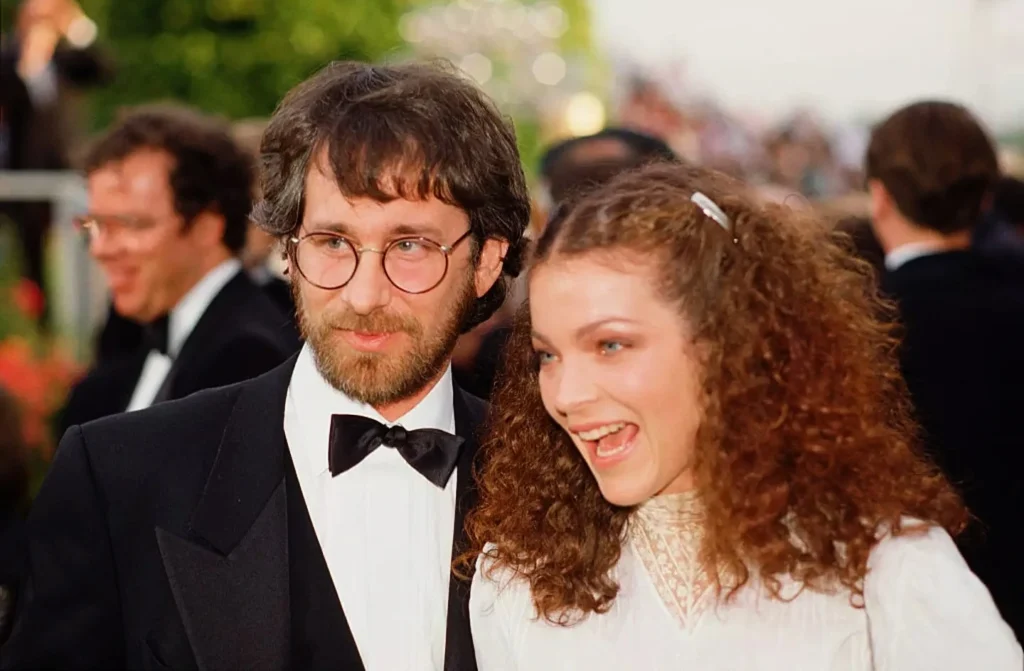
The marriage lasted only three and a half years, ending in divorce in 1989. The split was reportedly the third most expensive celebrity divorce in history at that time, with the competing demands of their careers cited as a primary factor in their separation.
Marriage to Kate Capshaw
On October 12, 1991, Spielberg married actress Kate Capshaw, whom he had met when she was cast as Willie Scott in “Indiana Jones and the Temple of Doom.” Capshaw converted to Judaism for Spielberg, and their relationship has lasted over three decades.
Children and Family Life
Together, Spielberg and Capshaw have five children: Sasha, Sawyer, Destry, and two adopted children, Theo and Mikaela. Spielberg also has a stepdaughter, Jessica Capshaw (known for her role on “Grey’s Anatomy”), from Kate’s previous marriage.
Sasha Spielberg has pursued a career as an actress and musician, performing under the stage name Buzzy Lee. Despite their father’s enormous wealth and influence, the Spielberg children have pursued their own paths with varying degrees of public visibility.
Hobbies and Interests
Beyond collecting art and memorabilia, Spielberg is an avid film watcher, reportedly viewing several movies each weekend when his schedule allows. He’s also passionate about boating, owning a succession of increasingly large yachts over the years.
Real Estate Portfolio
Pacific Palisades Compound
History and Notable Previous Owners
Spielberg’s primary residence sits on a spectacular 5-acre compound in Pacific Palisades, overlooking the Pacific Ocean. He purchased this property in 1985 from singer Bobby Vinton. What excited him most was the estate’s Hollywood pedigree: it had previously been owned by classic stars including Cary Grant and Barbara Hutton. David O. Selznick lived there while producing “Gone With the Wind,” a fact Spielberg particularly cherishes given his love of cinema history.
The Hobbit-Themed Room
The home features a unique Hobbit-themed media room with a retractable television and a fireplace designed to evoke the cozy aesthetic of the Shire from Tolkien’s works. In his biography, Spielberg explained: “Hobbits were part of my personal mythology growing up. I wanted to have the TV room, where I spend most of my life, to have a Hobbit feel.”
In 2013, he added a vineyard to the property. The estate has grown over the years through adjacent land purchases, creating a private compound that offers both security and space.
Current Estimated Value
Given the property’s size, location, improvements, and historical significance, estimating its value is challenging. Similar properties in Pacific Palisades sell for $50 to $100 million, but the Spielberg estate is substantially larger and more unique. Conservative estimates place its value north of $100 million, with some real estate experts suggesting it could be worth $150 to $250 million to the right buyer.
Not far from the main Palisades residence, the Spielbergs also own an equestrian facility for their horses.
Malibu Beachfront Property
For many years, Steven and Kate owned a prime 1.4-acre beachfront property in Malibu with 150 feet of ocean frontage. They assembled this holding over time, buying the first parcel in 1989 for $3.375 million and expanding in 2002 by purchasing the adjacent lot for $3.2 million.
They sold the combined property in 2015 for $26 million, representing a significant profit on their initial investment while freeing up capital and reducing their property management obligations.
New York City: The San Remo Apartment
On the East Coast, the Spielbergs own a 6,000-square-foot apartment overlooking Central Park West in The San Remo, one of Manhattan’s most prestigious co-op buildings. Located between West 74th and West 75th Streets, this 27-story luxury building has been home to numerous celebrities over the decades.
The building’s co-op board is famously selective. Steve Jobs purchased the top two floors of the North Tower in 1982, spent years renovating but never lived there, and eventually sold to Bono in 2003 for $14 million. Other notable residents have included Diane Keaton, Tiger Woods, Steve Martin, Bruce Willis, Demi Moore, Donna Karan, and Mary Tyler Moore.
The San Remo famously rejected Madonna’s application to buy into the building in 1985, demonstrating that even global superstardom doesn’t guarantee acceptance. Spielberg, however, had no such difficulties.
East Hampton Estate
Connection to Mentor Steve Ross
The Spielbergs own a 10-acre compound in East Hampton, with their main property encompassing 7.5 acres. The estate offers both oceanfront and cove access, providing privacy and stunning water views.
The property’s story connects to Steven’s relationship with Steve Ross, the longtime Chairman of Warner Communications and a significant mentor figure. Spielberg once said Ross was “very much what I wish my father was,” and he dedicated “Schindler’s List” to Ross’s memory.
David Geffen’s Adjacent Property
In 2013, Courtney Ross (Steve’s widow) listed a nearby 5.5-acre property for $75 million. After a year on the market, she sold it for $50 million to David Geffen, Spielberg’s DreamWorks co-founder. Geffen flipped the estate two years later for $67 million.
The Spielberg-Capshaw property is at least two acres larger than the former Ross/Geffen estate, making its value likely in the $80 to $100 million range or higher.
Naples, Florida Mansion
The Spielbergs maintain a large mansion in Old Naples, Florida, in one of the area’s most exclusive neighborhoods. Details about this property remain scarce, as the couple keeps this residence particularly private.
One local realtor joked: “If Steven Spielberg bought all the houses I’ve heard he’s bought here, he would own 62 homes. It’s just absurd.” The comment speaks to both the rumors that swirl around celebrity real estate and the Spielbergs’ success in maintaining privacy around this property.
Additional Properties and Investments
Steven has also financed multiple homes for his children throughout the Los Angeles area, helping them establish themselves while maintaining family connections in the region.
Combined, the Spielberg real estate portfolio is conservatively valued at over $200 million, with some estimates reaching as high as $300 to $400 million depending on current market conditions and how one values the Pacific Palisades compound.
Luxury Assets
Yachts: The Seven Seas and Beyond
Spielberg’s love of boating manifests in his yacht collection. In 2013, he purchased a 282-foot mega-yacht called The Seven Seas for $182 million. The vessel featured every luxury imaginable: multiple decks, a helipad, an infinity pool, a movie theater, and accommodations for 12 guests plus 26 crew members.
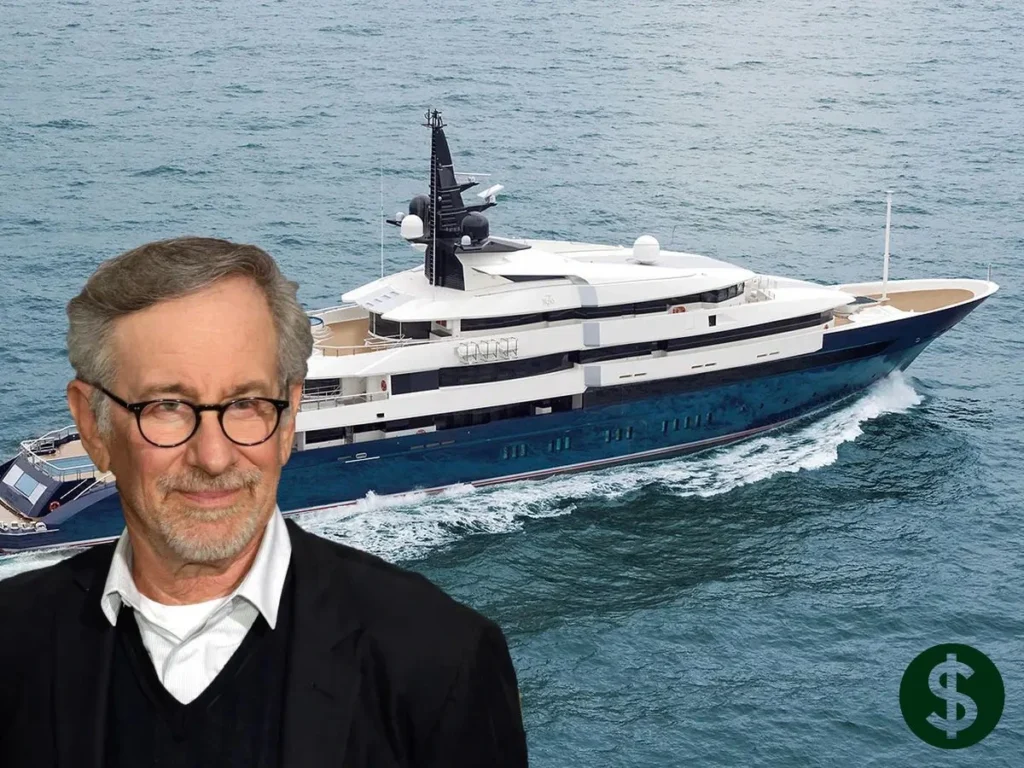
He later sold The Seven Seas and upgraded to an even larger 300-foot yacht that cost him a staggering $250 million. At that scale, annual operating costs alone run into the millions for crew salaries, maintenance, fuel, and docking fees. It’s the kind of expense that only makes sense when you’re earning $150 million per year.
Art Collection: Norman Rockwell and More
Beyond his 57 Norman Rockwell paintings, Spielberg collects artwork across various periods and styles. The Rockwell collection alone is worth tens of millions, as the artist’s original works have appreciated significantly over the decades.
His film memorabilia collection represents both personal passion and smart investment. Original props and scripts from classic films have become increasingly valuable as cinema history is recognized and preserved.
Film Memorabilia and Academy Award Preservation
Spielberg’s practice of purchasing Oscar statuettes from estate sales and auctions, then donating them back to the Academy, serves a purpose beyond personal collection. The Academy has rules against selling Oscars awarded after 1950, but earlier statuettes sometimes appear on the market.
By buying these awards and returning them to the Academy’s custody, Spielberg prevents them from being treated as mere commodities while preserving important pieces of film history for future generations.
Philanthropy and Giving Back
USC Shoah Foundation
The USC Shoah Foundation stands as Spielberg’s most significant philanthropic achievement. Founded in 1994 with all proceeds from “Schindler’s List,” the foundation has recorded over 55,000 video testimonies from Holocaust survivors and witnesses across 65 countries in 43 languages.
The archive serves as an irreplaceable resource for education, research, and remembrance. Students, scholars, and the public can access these testimonies through the foundation’s website and educational programs. As survivors age and pass away, the foundation’s work becomes increasingly vital in preserving firsthand accounts of one of history’s darkest chapters.
Spielberg’s commitment to the foundation goes beyond the initial funding. He remains actively involved in its mission and continues directing revenues from “Schindler’s List” to support its operations. The foundation has expanded its scope to document other genocides and mass atrocities, including testimonies from survivors of the Armenian Genocide, the Rwandan Genocide, and the Nanjing Massacre.
Make-A-Wish Foundation and Other Charities
Spielberg has maintained long-standing relationships with organizations like the Make-A-Wish Foundation, which grants wishes to children with critical illnesses. He’s personally met with numerous children whose wishes involved meeting him or visiting film sets.
He’s also affiliated with the International Medical Corps, Women’s Cancer Research Fund, and various educational initiatives. While these commitments receive less public attention than the Shoah Foundation, they represent consistent support for causes addressing healthcare, education, and human welfare.
Purchasing and Donating Academy Awards
His practice of buying Oscar statuettes at auction and donating them to the Academy of Motion Picture Arts and Sciences serves dual purposes. It removes these historically significant items from the commercial market while ensuring they’re preserved in the Academy’s collection where they belong.
This gesture, repeated multiple times over the years, costs him money while generating no financial return. It’s purely about honoring cinema history and the artists who earned those awards. Few people with Spielberg’s wealth would think to do something like this, which speaks to his genuine reverence for the art form that made him rich.
