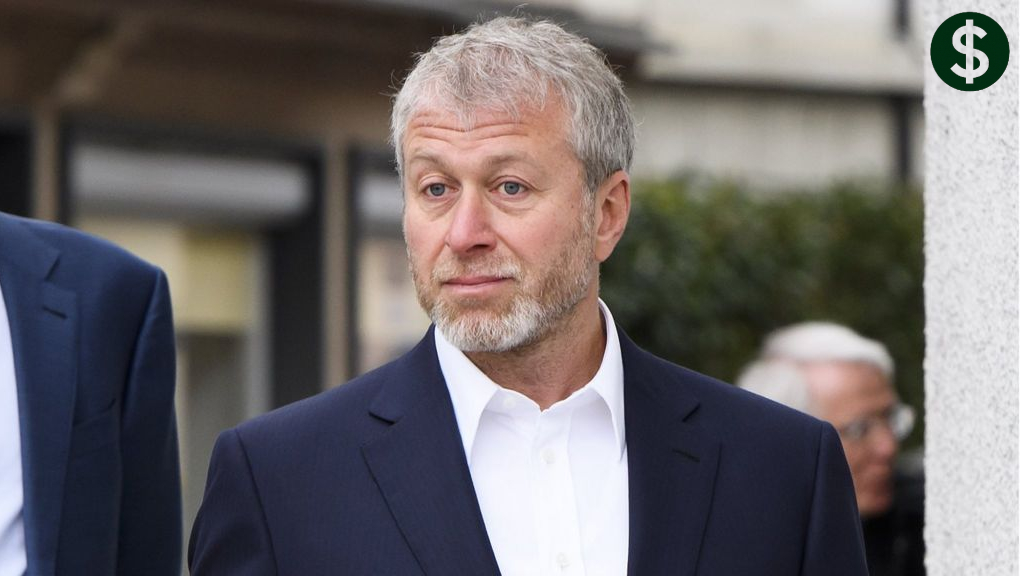
When you think about rags-to-riches stories, Roman Abramovich’s life reads like something out of a Hollywood script. I’ve spent considerable time researching this enigmatic billionaire, and what I’ve discovered is a tale that’s equal parts fascinating business acumen,
Controversial wealth accumulation and undeniable impact on global football. Let me walk you through the extraordinary journey of a man who went from losing his parents as a toddler to becoming one of the world’s most recognized oligarchs.
Net Worth and Financial Status
Roman Abramovich’s net worth estimates vary depending on the source and timing. As of 2025, estimates range from $9.2 billion to $14 billion. The variance reflects the difficulty in accurately valuing assets when sanctions are involved, and some holdings may be obscured through complex corporate structures.
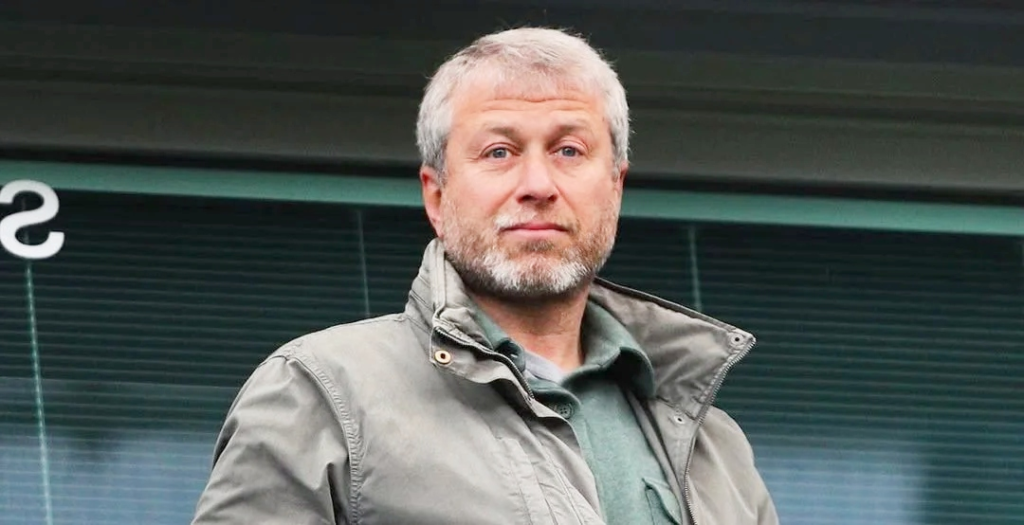
What’s clear is that despite the sanctions and forced sale of Chelsea, he remains extraordinarily wealthy. The sale of Chelsea actually increased his liquid assets significantly, though accessing and deploying that capital has become far more complicated.
His wealth sources remain diversified: steel through Evraz, various investments through Millhouse Capital, extensive real estate holdings (though many are now difficult to monetize), and other business interests primarily based in Russia.
Early Life and Background
Childhood and Family Tragedy
Roman Arkadyevich Abramovich entered the world on October 24, 1966, in Saratov, in what was then the Soviet Union. Here’s what makes his early story so compelling: by the time he turned four years old, both of his parents had died. Think about that for a moment. A child, barely old enough to remember his parents, suddenly orphaned in Soviet Russia.
His family background adds another layer of complexity. Abramovich comes from a Jewish Lithuanian family, and his relatives faced brutal persecution under Soviet rule. His parents were deported to Siberia during the Soviet occupation, and his grandfather was sent to a Gulag. These weren’t just historical footnotes. They were the harsh realities that shaped the world into which Roman was born.
Education and Early Struggles
After losing his parents, relatives raised young Roman Abramovich, and he spent much of his youth in the Komi Republic. I’ve found that this period of his life remains somewhat mysterious, with limited public information about his upbringing. What we do know is that he eventually pursued higher education, attending the Gubkin Institute of Oil and Gas in Moscow and later earning a Master’s degree from the Moscow State Law Academy.
But here’s where his story gets interesting. During his army service, Abramovich didn’t just wait around for opportunities. He worked as a street trader and mechanic, getting his hands dirty in the real economy. This wasn’t some privileged kid coasting through life. He was grinding it out, learning the fundamentals of business at street level.
Building a Fortune: The Rise to Wealth
First Business Ventures
When the Soviet Union began its slow collapse in the late 1980s and early 1990s, something remarkable happened. Capitalism started creeping into a system that had suppressed it for decades. Abramovich saw the writing on the wall and jumped in with both feet.
His earliest successes involved selling consumer goods. I’m talking about basic items like tires and rubber ducks. With his first wife, Olga, he established a company making dolls. These weren’t glamorous businesses, but they were profitable. He also worked trading commodities for the Swiss trading firm Runicom, building connections and learning the international trade game.
The Post-Soviet Economic Opportunity
The real turning point came during Russia’s chaotic transition from communism to capitalism. I’ve researched this period extensively, and it was essentially the Wild West. State-owned assets were being privatized, often through processes that were, let’s say, less than transparent.
Roman Abramovich wasn’t just lucky. He was strategic. He developed close ties with Russian government officials, which opened doors that remained closed to others. His business empire expanded rapidly to include oil conglomerates, pig farms, timber operations, sugar production, and various foodstuffs. He was diversifying before most people even understood what that meant.
Sibneft: The $13 Billion Deal
Here’s where Abramovich wealth really exploded. In 1995, he acquired a controlling interest in Sibneft, a Russian oil company. Now, I need to be straight with you: this acquisition happened through what many have called a rigged auction. The legitimacy of how he obtained these shares has been questioned by numerous sources, and it remains one of the most controversial aspects of his career.
But whatever you think about how he got it, what he did with it was impressive. Abramovich transformed Sibneft into a multi-billion dollar powerhouse. Then, in 2005, he sold the company to Gazprom, the Russian state-owned gas giant, for a staggering $13 billion. That single transaction cemented his status as one of Russia’s wealthiest individuals.
Diversification into Steel and Other Industries
Abramovich didn’t put all his eggs in one basket. He invested heavily in steel production, acquiring stakes in Evraz, a Russian multinational steel producer that became one of the largest companies in Russia. Through his investment company, Millhouse Capital, he oversees a range of investments spanning energy, infrastructure, and manufacturing.
I’ve found that this diversification strategy has been key to maintaining his wealth over the years. While oil prices fluctuate and political winds shift, having fingers in multiple pies provides stability. He’s also made moves into technology companies, recognizing that the future of wealth creation was shifting toward tech.
The Chelsea FC Era
Acquisition and Transformation
In 2003, Roman Abramovich did something that would change English football forever. He purchased Chelsea Football Club for £140 million (about $250 million at the time). For context, that seemed like an astronomical sum back then, though it looks like a bargain now.
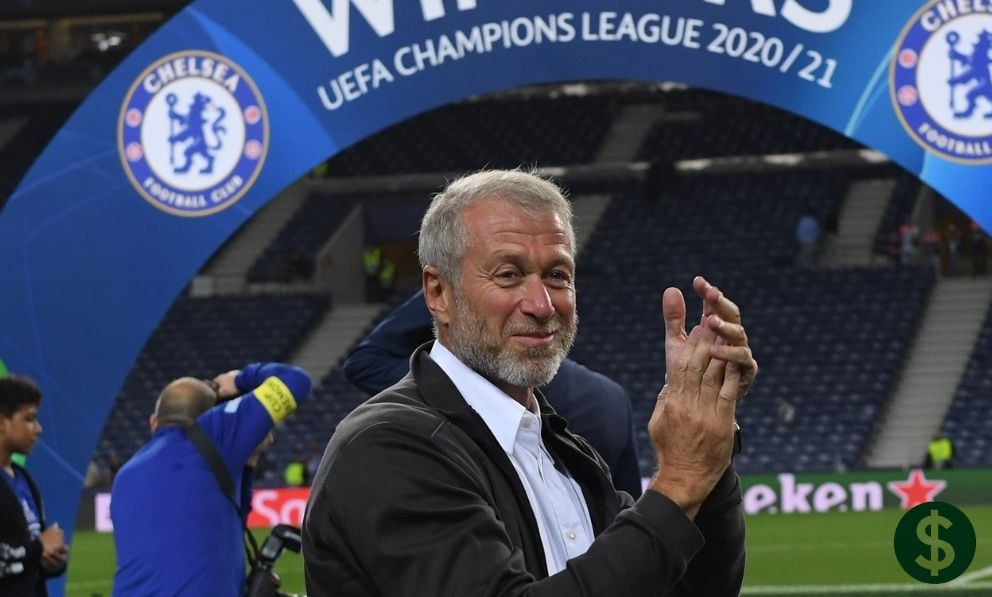
When Roman Abramovich took over, Chelsea was a respectable club but hardly a powerhouse. They were what you’d call a mid-table team with occasional flashes of brilliance. What happened next was unprecedented. Abramovich opened his wallet and poured money into the club like water. We’re talking about billions invested over nearly two decades.
Unprecedented Success and Trophies
The results speak for themselves. Under Roman Abramovich ownership, Chelsea won multiple Premier League titles, FA Cups, League Cups, the UEFA Champions League, and the UEFA Europa League. The club went from being a solid but unspectacular team to one of the most competitive forces in European football.
I’ve watched this transformation unfold, and it wasn’t just about buying expensive players (though he certainly did that). It was about creating a winning culture, attracting top managers, and building world-class facilities. The investment went deep into the club’s infrastructure, from the training grounds to the youth academy.
Legacy in Football
Here’s what’s remarkable: even after Abramovich was forced to sell the club in 2022, his legacy at Chelsea remains largely intact. Fans remember the glory years, the trophies, the incredible players who wore the blue shirt. He fundamentally changed what was possible for a football club with the right investment and ambition.
Political Career and Public Service
Governor of Chukotka
Now, this is a part of Roman Abramovich story that often gets overlooked. From 2000 to 2008, he served as the governor of Chukotka, a remote federal subject of Russia in the far east. This wasn’t some ceremonial position. Chukotka was (and remains) one of the most isolated and underdeveloped regions in Russia.
Infrastructure and Development Investments
What impresses me about this period is the sheer scale of investment Abramovich poured into the region. We’re talking about over $1.3 billion of his own money going toward infrastructure, schools, hospitals, and basic services. For a region that had been neglected for decades, this was transformational.
He’s donated more than $2.5 billion overall to develop schools and infrastructure in Chukotka. Say what you will about how he made his money, but he did put significant resources back into one of Russia’s most forgotten corners. This makes him one of the most generous Russian billionaires in terms of documented charitable giving.
Personal Life
Marriages and Children
Roman Abramovich personal life has been, shall we say, eventful. He’s been married three times and has seven children from various relationships. His first marriage was to Olga Yurevna Lysova in 1987, and they had children together before divorcing.
His second marriage was to Irina Vyacheslavovna Malandina in 1991. They had five children together, but the marriage ended in divorce in 2007. That divorce settlement was notably expensive, including an 18-million-pound estate in West Sussex and the Pelorus yacht, which she later sold for $300 million.
Relationships and Family Dynamics
His third marriage was to Dasha Zhukova, a Russian art collector and businesswoman, in 2008. They had two children together before separating in 2018. Abramovich is known for keeping his personal life relatively private, especially compared to other billionaires who court media attention.
I’ve found that despite his public profile through Chelsea and his business dealings, he maintains a low profile when it comes to his family and personal relationships. He’s not one for reality TV or a constant social media presence.
Luxury Lifestyle and Assets
Yacht Collection
Let’s talk about the toys. Roman Abramovich is considered the world’s leading spender on yachts, and when you see the numbers, you’ll understand why. His fleet of vessels is worth hundreds of millions of dollars.
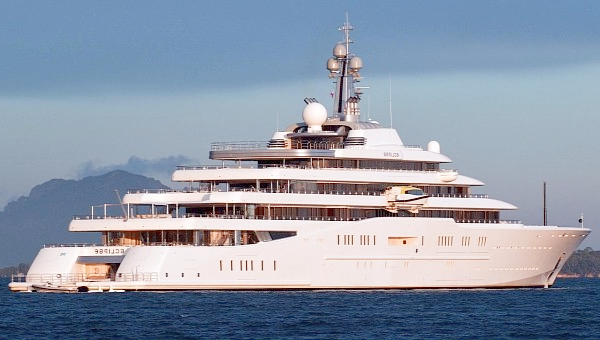
The crown jewel is the Eclipse, a custom-built yacht that cost approximately $400 million. This isn’t just a boat. It’s a floating palace. The Eclipse features two swimming pools, two helicopter landing pads, and, get this: a detachable submarine. At one point, it was the largest privately-owned yacht in the world.
He’s owned multiple yachts over the years. The Pelorus went to his ex-wife in the divorce settlement. The Luna sold for $360 million. When you add up all the yachts he’s owned, the total value easily exceeds a billion dollars.
Private Aircraft Fleet
The yachts are impressive, but Roman Abramovich aircraft collection might be even more remarkable. His most notable plane is a Boeing 767-33A/ER that he calls “The Bandit.” After purchasing it from Hawaiian Airlines, he had it completely retrofitted and customized.
We’re talking about a 30-person dining room and luxury bathrooms that would make a five-star hotel jealous. But here’s the part that really gets me: The Bandit has advanced missile avoidance systems, the same type used by Air Force One. That’s not standard equipment on private jets.
In June 2022, the FBI announced its intention to seize two of his jets: a Boeing 787 Dreamliner and a Gulfstream, with a combined value of $400 million. These planes, owned through shell companies in the British Virgin Islands, allegedly violated export sanctions after Russia invaded Ukraine.
Exotic Car Collection
If you’re keeping score, Abramovich’s car collection is valued at over $11 million. One standout is a 190-mph Ferrari FFX, and here’s the kicker: only 29 were ever produced. He also owns a limited-edition Pagani Zonda Roadster, with just 15 units made worldwide.
His garage includes a Bugatti Veyron, a Mercedes AMG GT3, and an Aston Martin Vulcan. These aren’t cars you drive to the grocery store. They’re automotive art pieces that happen to have engines.
Global Real Estate Portfolio
Abramovich’s real estate portfolio allegedly exceeds £340 million. Let me walk you through some of the highlights, because the scale is genuinely mind-boggling.
London Properties
In London, he owns a massive £125 million mansion in Kensington Palace Gardens, an area known as “Billionaire’s Row.” He also has a three-story waterfront penthouse in Chelsea worth £30 million and owns a significant portion of the Chelsea Waterfront development.
International Holdings
In Manhattan’s Upper East Side, Abramovich purchased four adjacent townhouses for $74 million. His plan? Combine them into one massive property that the media dubbed an “urban castle.” The renovation costs were projected to exceed $100 million, more than the purchase price itself.
On the French Riviera in Côte d’Azur, he bought a former hotel for just over £17 million. This 12-bedroom building was once frequented by the Royal Family. There’s an interesting story here: from 2006 to 2007, he undervalued the property for tax purposes, and a European court later ordered him to pay an additional 1.2 million Euros in property taxes.
In 2020, he paid $65 million for an extensive property in Israel, breaking several Israeli real estate records as the largest residential real estate deal in the country’s history. He also owns a 200-acre, $18 million ski ranch in Colorado,
Plus an entire nearby ski slope he acquired for $5.6 million. There’s also an estate in St. Bart’s worth £54 million and a hotel in Tel Aviv purchased for $17 million.The list honestly goes on and on. These are just the properties we know about.
Art Collection and Cultural Patronage
Abramovich is a serious art collector and patron. In 2008, he purchased a Francis Bacon painting for approximately $86.3 million at auction. He also acquired a piece by Lucian Freud for about $33.6 million. These aren’t impulse purchases. They represent a deep engagement with the art world.
Beyond collecting, he sponsors various exhibitions open to the public. This patronage has made him a significant figure in the international art scene, and his former wife Dasha Zhukova’s involvement in the art world only deepened these connections.
Philanthropy and Charitable Work
I’ve already mentioned his investments in Chukotka, butRoman Abramovich charitable work extends further. He’s donated millions to education, healthcare, and Jewish causes around the world. He’s received honorary doctorates from the Russian State University for the Humanities, Moscow State Institute of International Relations, Ben-Gurion University of the Negev, and Tel Aviv University.
He also received the Order of Honour for his contributions to Chukotka’s economic development. These aren’t just ceremonial gestures. They recognize substantial financial commitments to institutions and causes.
Controversies and Allegations
Oligarch Status and Asset Acquisition
Here’s where we need to have an honest conversation. Abramovich is widely considered an “oligarch,” a term that describes the small group of business magnates who acquired massive wealth during Russia’s transition from Soviet communism to capitalism.
The way many of these oligarchs, including Abramovich, acquired state-owned assets has been heavily criticized. His acquisition of Sibneft in 1995 is particularly controversial, with many describing the auction process as rigged. These allegations have followed him throughout his career and contributed to his complex public image.
Alleged Ties to the Kremlin
Roman Abramovich relationship with the Russian government and President Vladimir Putin has been a subject of intense scrutiny. While the exact nature of these ties remains somewhat opaque, they became the basis for international sanctions in 2022.
There have also been allegations of bribery and antitrust violations over the years. The questions about how closely he’s connected to the Kremlin and Russian power structures have never fully gone away.
The 2022 Sanctions and Forced Sale
Russia’s Invasion of Ukraine
February 2022 changed everything for Abramovich. When Russia invaded Ukraine, the international community responded with sweeping sanctions targeting Russian oligarchs and those perceived to have close ties to Putin’s government.
International Sanctions Imposed
The United Kingdom and European Union imposed sanctions on Abramovich due to his alleged connections to the Russian government. These weren’t minor restrictions. They effectively froze his UK assets and made it impossible for him to continue owning Chelsea Football Club.
The $4.25 Billion Chelsea Sale
On February 26, 2022, Abramovich announced he was transferring his ownership interest in Chelsea to a charitable trust. But that wasn’t enough. He was ultimately forced to sell the club entirely.
In May 2022, Chelsea was sold to a consortium led by American businessman Todd Boehly for £4.25 billion (approximately $5.3 billion). This was one of the largest sales in football history. The structure was complex: £3.2 billion went to a charitable trust, with £2.1 billion committed as investment in the club over the next decade.
It marked the end of Abramovich’s nearly two-decade ownership of Chelsea. The sale became a global media spectacle and represented a dramatic fall from grace for a man who had seemed untouchable just months earlier.
Current Business Interests
Evraz and Steel Holdings
Despite the sanctions and forced sale of Chelsea, Abramovich still maintains significant business interests. Evraz remains a major component of his portfolio. This Russian multinational steel producer continues to be one of the largest companies in Russia and a substantial source of his wealth.
Millhouse Capital
Millhouse Capital, his investment company, continues to oversee diverse investments across energy, infrastructure, and manufacturing sectors. However, the sanctions have severely limited his ability to make new business ventures in Western markets.
Technology Investments
Abramovich has invested in technology companies like StoreDot and others, recognizing the shifting landscape of wealth creation. These investments show a forward-thinking approach, though the sanctions have complicated his ability to expand in this sector.
Life After Chelsea: What Does Abramovich Do Now?
This is perhaps the biggest question surrounding Roman Abramovich today. Since the forced sale of Chelsea and the imposition of sanctions, he’s largely disappeared from public view. His current activities remain somewhat mysterious.
What we know is that he’s believed to still be managing his existing wealth and business holdings, particularly those based in Russia. However, the restrictions placed on him by UK and EU sanctions have essentially cut him off from Western business opportunities.
He holds dual citizenship in Russia and Israel, which provides him with some flexibility in movement. But his days of freely operating in London, buying Premier League clubs, and making major Western investments appear to be over, at least for the foreseeable future.
Awards and Recognition
Beyond the honorary doctorates I mentioned earlier, Abramovich has received recognition for his business achievements and philanthropy. The Order of Honour from the Russian government acknowledged his work in Chukotka.
However, his legacy is complicated. The same qualities that brought him recognition (business acumen, investment in football, philanthropy) are overshadowed by questions about how he accumulated his wealth and his alleged connections to the Russian government.
Legacy and Impact
So what’s the final assessment of Roman Abramovich? That’s not an easy question to answer.
On one hand, his impact on football is undeniable. He transformed Chelsea from a mid-table club into a global powerhouse and changed the economics of English football forever. His investment showed what was possible when serious money entered the sport.
His philanthropic work in Chukotka represents one of the largest private investments in a forgotten region of Russia. Schools, hospitals, and infrastructure projects have genuinely improved lives in one of the world’s most remote areas.
On the other hand, the questions about how he acquired his initial wealth won’t go away. The allegations of rigged auctions, close ties to the Kremlin, and the broader context of how Russian oligarchs emerged from the Soviet collapse cast a long shadow.
The 2022 sanctions and forced sale of Chelsea represent perhaps the most dramatic chapter yet. A man who seemed to have successfully transitioned from controversial Russian oligarch to respected international businessman found himself suddenly persona non grata in the West.
What I’ve learned from studying Abramovich’s story is that it defies simple categorization. He’s simultaneously a shrewd businessman and a controversial oligarch, a generous philanthropist and someone accused of corrupt practices, a transformative figure in football and someone whose wealth accumulation raises serious ethical questions.
His story is ultimately a mirror reflecting the complex, often troubling transition of Russia from Soviet state to capitalist economy, the globalization of wealth and sport, and the ways political events can suddenly upend even the most carefully constructed empires.
Whatever your view of Roman Abramovich, one thing is certain: his journey from orphaned child in Soviet Russia to billionaire oligarch to sanctioned former football club owner is one of the most extraordinary stories of our time. It’s a tale that encompasses triumph and controversy, immense wealth and ultimate consequences, and it’s far from over.
