I’ve spent considerable time analyzing Swift’s financial trajectory, and what strikes me most is how deliberately she’s constructed her wealth. This isn’t a story of luck or viral moments. It’s a masterclass in business strategy, artistic control, and understanding your audience at a molecular level.
Early Life and Career Beginnings
Growing Up in Pennsylvania
Born on December 13, 1989, in West Reading, Pennsylvania, Taylor Alison Swift came into a world that would soon be dominated by her music. Named after James Taylor, she grew up on a Christmas tree farm with her parents, Scott and Andrea Swift, and her younger brother, Austin.
Here’s what I discovered about her early advantages: Swift’s family wasn’t just comfortable; they were financially sophisticated. Her father worked as a stockbroker for Merrill Lynch and descended from three generations of bank presidents, according to The New Yorker. Her mother worked in finance, selling mutual funds. This background gave young Taylor something invaluable beyond money: financial literacy from birth.
The Move to Nashville
At 14, Swift convinced her family to relocate to Nashville. This wasn’t a whim. She’d already been rejected by record labels once, told her Dolly Parton and The Chicks covers weren’t original enough. That rejection didn’t stop her; it refined her approach.
The family’s move coincided with Scott Swift’s transfer to Merrill Lynch’s Nashville office. Strategic? Absolutely. Her father even purchased shares in Big Machine Records, which would later sign his daughter. While critics point to this as privilege, I see it differently: Swift had the runway to develop her craft without financial pressure, but she still had to deliver the goods.
Breaking Into the Music Industry
By 2006, at just 16 years old, Swift released her self-titled debut album. It reached number five on the Billboard 200 and produced two number-one country singles: “Our Song” and “Should’ve Said No.” The album has since been certified platinum more than four times by the Recording Industry Association of America.
What I find remarkable is how quickly she established her signature move: turning personal experiences into universally relatable songs. This wasn’t just good songwriting; it was a business model that would generate billions.
Rise to Stardom
Debut Album Success
Swift’s debut moved 40,000 copies in its first week. Modest by today’s standards, but for a 16-year-old country artist? Exceptional. The album’s success gave her something crucial: proof of concept. She could write, perform, and connect with an audience willing to spend money.
The Fearless Breakthrough
Then came “Fearless” in 2008. This is where Swift’s trajectory changed forever. The album sold 592,000 copies in its first week and spawned the crossover hit “Love Story.” At 20 years old, Swift became the youngest artist to win Album of the Year at the Grammy Awards, a record that stood for years.
I’ve analyzed the “Fearless” era extensively, and here’s what stands out: Swift didn’t just make a great album. She created a cultural moment. The accompanying tour grossed $75 million, establishing her as a live performer who could command arenas.
Transition from Country to Pop
Between 2010 and 2014, Swift executed one of the smoothest genre transitions in modern music. “Speak Now” sold over 1 million copies in its first week. “Red” moved 1.2 million. Both albums straddled country and pop, preparing audiences for what came next.
Then, on her 25th birthday, Swift released “1989” and went full pop. The gamble paid off spectacularly.
Building the Empire
Record-Breaking First Week Sales
Here’s what I discovered digging through Swift’s sales data: she holds the record for most consecutive number-one album debuts on the Billboard 200, with 14 straight releases hitting the top spot. That’s unprecedented consistency.
“1989” sold 1.287 million copies in its first week in 2014. When she re-recorded it as “1989 (Taylor’s Version)” in 2023, it moved 1.359 million copies, accounting for 43.8% of all albums sold in the U.S. that week, according to Billboard.
“The Tortured Poets Department,” released in April 2024, demolished even these numbers: 2.61 million equivalent album units in week one. For context, most artists today celebrate 100,000 first-week sales.
Grammy Awards and Industry Recognition
Swift has won 14 Grammy Awards, including Album of the Year four times. Only Stevie Wonder, Frank Sinatra, and Paul Simon have won Album of the Year three or more times, making Swift’s four wins historic.
She’s also collected 40 American Music Awards and 40 Billboard Music Awards, more than any other artist. These aren’t just trophies; they’re market signals. Each award drives streaming, sales, and tour ticket prices.
The Eras Tour Phenomenon
Tour Revenue and Attendance Records
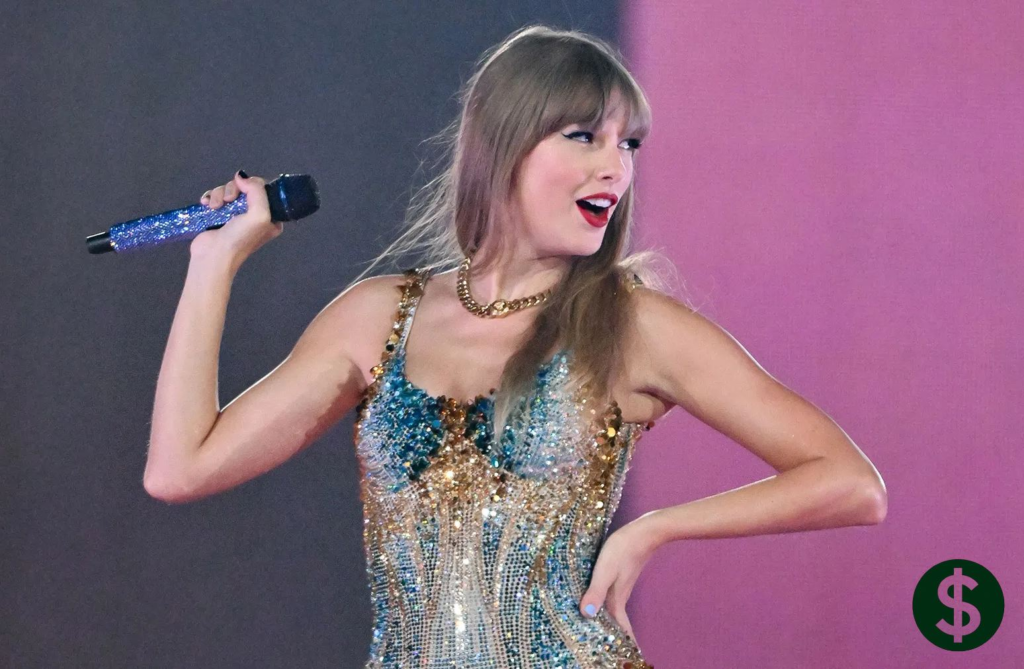
Let me be blunt: The Eras Tour redefined what’s possible in live entertainment. Over 21 months, Swift performed 149 sold-out shows across five continents, grossing $2.2 billion in ticket sales. That’s not a typo. $2.2 billion.
To put this in perspective, Elton John’s “Farewell Yellow Brick Road” tour, previously the highest-grossing tour ever, made $939 million over five years. Swift nearly tripled that in less than two years.
More than 10.1 million fans attended, paying an average ticket price of $204. The North American leg alone generated $1.04 billion in revenue, according to Pollstar, the concert industry’s leading trade publication.
Economic Impact on Local Communities
Here’s where it gets interesting. The Federal Reserve Bank reported that Swift’s tour stops created measurable economic impacts in host cities. Hotels, restaurants, transportation, and local businesses saw spending surges comparable to hosting a Super Bowl.
Economists estimated the tour generated between $5 billion and $10 billion in total economic activity in the United States alone. Cities lobbied for tour stops. Officials credited Swift with boosting quarterly GDP figures. This wasn’t just a concert tour; it was an economic stimulus package.
Concert Film Success
In October 2023, Swift released “Taylor Swift: The Eras Tour” in theaters. She bypassed traditional Hollywood studios and struck a direct deal with AMC Theatres, negotiating an unprecedented 50% of first-dollar gross.
The film opened with $96 million and ultimately grossed $260 million globally. Swift’s take? $130 million from theatrical release alone. She then sold streaming rights to Disney for another $75 million in February 2024.
Total concert film earnings: $205 million. For a project she already performed live.
Streaming and Digital Presence
YouTube Revenue
Swift maintains two YouTube channels with a combined viewership exceeding 69 billion views. Using industry-standard estimates of $5 per thousand views, her channels have generated approximately $345 million in advertising revenue over their lifetime.
Spotify Milestones
Swift’s relationship with Spotify started rocky. In 2014, she pulled her entire catalog, calling streaming an “experiment” that undervalued artists. She wrote an op-ed in The Wall Street Journal arguing for fair compensation.
By 2017, she’d negotiated better terms and returned to the platform. She now regularly breaks Spotify records. “Anti-Hero” from “Midnights” became the platform’s most-streamed song in a single day. In 2022, Swift became the first artist to monopolize all top 10 spots on the Hot 100 simultaneously.
Royalties and Publishing Rights
As the writer or co-writer on virtually all her songs, Swift earns publishing royalties on every sale, stream, and radio play. Billboard estimated her catalog generated $59,000 weekly just from streaming royalties in 2017. That number has grown exponentially.
Her songwriting catalogue is now valued at $400 to $500 million, making it one of the most valuable in contemporary music.
The Battle for Her Music
Big Machine Records Dispute
This is where Swift’s business acumen truly shines. In 2018, when her six-album deal with Big Machine Records expired, label founder Scott Borchetta offered a renewal: she’d regain control of one old album for each new album delivered.
Swift saw the trap. Borchetta was shopping the company for sale. Any deal she signed would transfer to new owners. She walked away from her entire back catalog, six albums representing her life’s work to that point.
The Scooter Braun Controversy
In June 2019, music manager Scooter Braun purchased Big Machine Label Group through his company Ithaca Holdings for a reported $300 million. This gave Braun ownership of Swift’s first six albums’ master recordings.
Swift went public with her anger, calling it her “worst case scenario.” The dispute became a flashpoint in discussions about artist rights and music ownership. In 2020, Braun sold the masters to private equity firm Shamrock Capital for approximately $300 million.
Re-Recording Her Catalog
Here’s what I find brilliant: instead of accepting defeat, Swift announced she’d re-record her first six albums. She owned the songwriting; she could legally create new versions and encourage fans to stream those instead.
“Fearless (Taylor’s Version)” dropped in April 2021, moving 291,000 equivalent units in week one. “Red (Taylor’s Version)” followed in November 2021 with 605,000 units. “Speak Now (Taylor’s Version)” and “1989 (Taylor’s Version)” came in 2023.
Each re-recording included “From the Vault” songs, previously unreleased tracks that gave fans new content while devaluing the original masters. It was economic warfare waged through artistic output.
Buying Back Her Masters (2025)
On May 30, 2025, Swift made a stunning announcement: she’d purchased her original master recordings from Shamrock Capital. Sources told Billboard the deal cost approximately $360 million.
At 35 years old, Swift now owns her entire catalog outright. The Eras Tour’s success provided the financial firepower to make it happen. In her announcement, Swift called it “a dream come true” and suggested her re-recording project might conclude, with “Reputation (Taylor’s Version)” potentially delayed indefinitely.
Revenue Streams Beyond Music
Touring Income
Swift’s touring revenue dwarfs most artists’ entire careers. The “Reputation Stadium Tour” in 2018 grossed $345 million, breaking U.S. records. The “1989 World Tour” made $250 million in 2015.
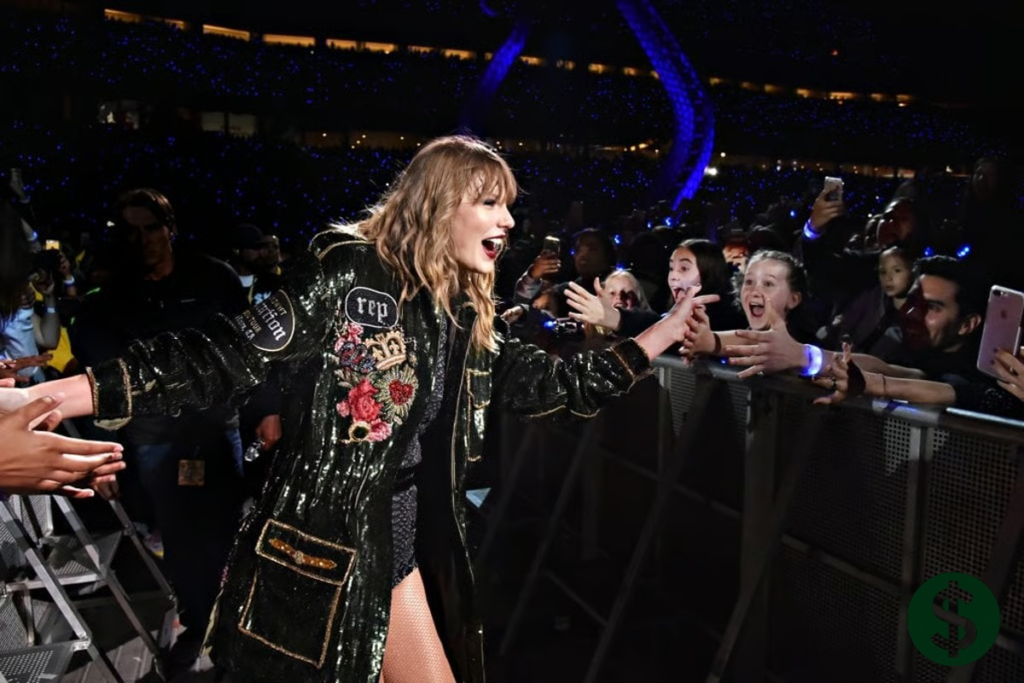
Between June 2015 and June 2016, largely from the “1989” tour, Swift earned $170 million. Between June 2018 and June 2019, the “Reputation” tour helped her pocket $185 million.
Merchandise Sales
Swift’s merchandise operation is sophisticated. During the “Eras Tour,” she generated $200 million in merchandise sales across just 60 shows in 2023, according to Deadline. That’s $3.3 million per show in t-shirts, hoodies, and friendship bracelets.
For “Folklore,” Swift sold cardigans to promote the single “Cardigan,” bundled digital albums with physical merchandise to boost chart positions, and partnered with Stella McCartney for exclusive designs.
Brand Endorsements and Partnerships
Capital One and Financial Services
Swift’s partnership with Capital One spans years, including commercials, exclusive credit cards offering early concert access, and sponsored content. Diet Coke reportedly paid her $26 million for a single endorsement deal.
Fashion Collaborations
Beyond Stella McCartney, Swift partnered with Keds shoes, creating limited-edition designs. Her fashion influence is measurable: when she wears something publicly, sales spike.
Technology and Beauty Deals
Swift’s endorsement portfolio includes Apple, AT&T, Verizon Wireless, CoverGirl, Elizabeth Arden fragrances, Sony Electronics, and Target. Each deal likely commands eight figures given her reach.
Film and Television Appearances
Swift has appeared in films including “Amsterdam” (2022), “Cats” (2019), “The Giver” (2014), and “Valentine’s Day” (2010). She voiced Audrey in “The Lorax” (2012) and made a memorable cameo on “New Girl.”
While acting isn’t her primary income source, these appearances expand her brand reach and demographic appeal.
Directing and Creative Control
Swift has directed several of her own music videos, including “The Man,” “Cardigan,” and “Anti-Hero.” She also directed “All Too Well: The Short Film,” which won awards and demonstrated her capability behind the camera.
She’s partnered with Searchlight Pictures to write and direct a feature film, though details remain scarce. This move toward full creative control follows her playbook: own everything you create.
Real Estate Portfolio
Nashville Properties
Swift’s real estate journey began in 2009. At 19, she paid $2 million for a downtown Nashville condo, adding the unit below for $400,000. Today, these properties are worth approximately $4 million combined.
In 2011, she bought an 8,000-square-foot mansion on six acres in Nashville’s suburbs for $2.5 million. Current estimated value: $6 million.
Rhode Island Mansion
In 2013, Swift paid $17.75 million in cash for “High Watch,” an 11,000-square-foot mansion on 5.2 acres overlooking Little Narragansett Bay. The eight-bedroom, ten-bathroom estate sits 65 feet above the water and includes a pool, fitness room, and five-car garage.
She immortalized the property in “The Last Great American Dynasty” on “Folklore,” singing about its previous owner, Rebekah Harkness. Current estimated value: $30 million.
New York City Apartments
Swift owns approximately $50 million worth of Manhattan real estate in Tribeca. Starting in 2014, she bought a penthouse she converted into a 10-bedroom duplex, now worth north of $20 million. She added a neighboring four-story penthouse in 2017 for $12.5 million, then another condo in the same building in 2018 for $10 million.
Los Angeles Estates
Swift’s crown jewel is a Beverly Hills estate she purchased in 2015 for $25 million. The property, built for legendary producer Samuel Goldwyn, underwent extensive renovation. Based on comparable sales, it’s now worth at least $70 million.
She previously owned two other Beverly Hills properties purchased in 2011 and 2012, selling both in 2018 for modest profits.
Additional Holdings
Swift reportedly owns a $9.45 million home in London’s Primrose Hill neighborhood. She briefly owned a property in Hyannisport, Massachusetts, part of the Kennedy compound, purchased for $4.9 million in 2012 during her relationship with Conor Kennedy.
Total real estate portfolio value: approximately $150 million.
Philanthropy and Charitable Giving
Disaster Relief Contributions
Swift’s charitable giving is extensive and often quiet. She donated $100,000 to Iowa flood relief in 2008, $750,000 for tornado relief in 2010, and $1 million to the Middle Tennessee Emergency Response Fund after a 2020 tornado.
In January 2025, she donated to 10 organizations supporting Los Angeles wildfire relief. In October 2024, she gave $5 million to Feeding America for hurricane relief following Hurricanes Helene and Milton.
Support for Struggling Families
During the COVID-19 pandemic, Swift donated $13,000 each to two moms profiled in The Washington Post about their financial struggles. She’s also sent individual fans checks for $1,989 to help with student loans and medical bills.
In February 2024, she gave $100,000 to the family of Lisa Lopez-Galvan, a Kansas City radio DJ killed during the Chiefs’ Super Bowl parade shooting.
Tour Crew Bonuses
Here’s something remarkable: In August 2023, Swift gave each of her Eras Tour truck drivers a $100,000 bonus. With over 50 drivers, that’s $5.5 million. By December 2024, her total contributions to the tour crew over two years reached $197 million.
That’s not a charitable donation; that’s recognizing the people who make your success possible.
Industry Advocacy
Swift has been vocal about artist compensation, successfully pressuring Apple Music to pay artists during trial periods in 2015. She’s donated to GLAAD, the Tennessee Equality Project, and various educational initiatives.
In 2012, she gave $4 million to fund the Taylor Swift Education Center at the Country Music Hall of Fame.
Personal Life and Public Image
Relationship History
Swift’s dating history has been tabloid fodder for years, with relationships inspiring some of her biggest hits. Joe Jonas, Taylor Lautner, Jake Gyllenhaal, Harry Styles, Calvin Harris, Tom Hiddleston, and John Mayer all reportedly inspired songs.
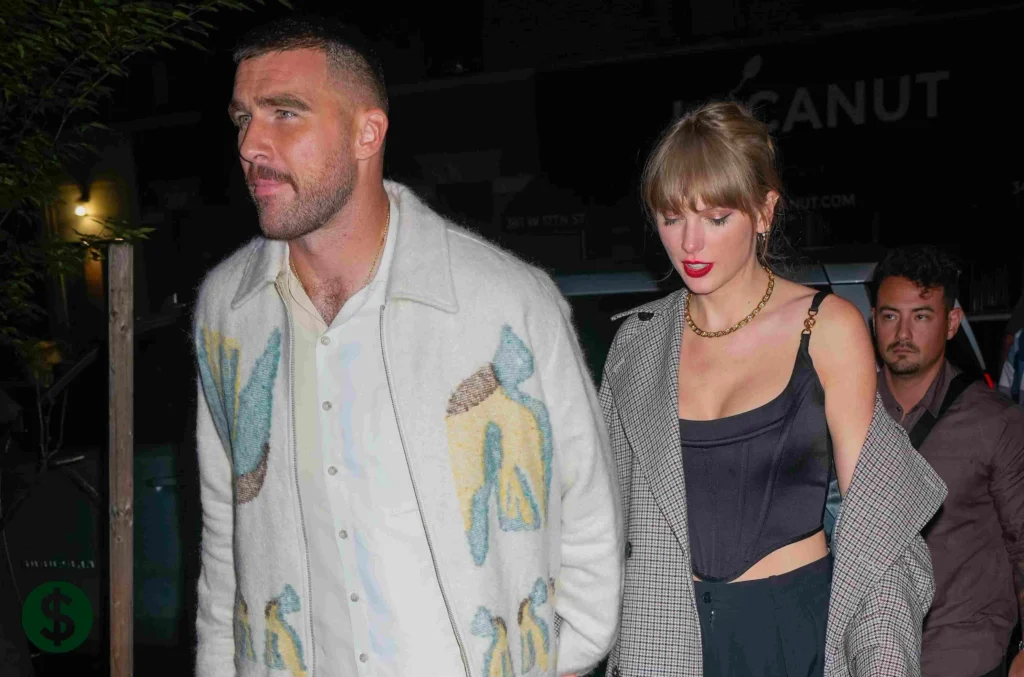
Her six-year relationship with actor Joe Alwyn from 2017 to 2023 was notably private, a shift from her earlier public romances.
Engagement with Travis Kelce
In September 2023, rumors connected Swift to Kansas City Chiefs tight end Travis Kelce. The relationship was confirmed when Swift attended a Chiefs game, sitting with Kelce’s mother.
On August 26, 2025, the couple announced their engagement. Kelce’s estimated Taylor Swift Net Worth of $50 million pales compared to Swift’s billions, but their relationship has created powerful cross-marketing opportunities between music and NFL audiences.
Brand Management and Fan Connection
What sets Swift apart is her understanding of brand management. She called out Spotify and Apple Music when their policies hurt artists. She embraced social media early, building direct relationships with fans who call themselves “Swifties.”
She plants Easter eggs in music videos, lyrics, and social posts, turning fan analysis into free marketing. She surprises fans with personal interactions, gifts, and handwritten notes. This loyalty translates directly to sales.
Taylor Swift Net Worth
Music Catalog Value
Swift’s master recordings and publishing rights are valued at $400 to $500 million. This includes both the original masters she repurchased and the new versions she created through re-recording.
Touring Revenue
The Eras Tour alone added approximately $500 million to Taylor Swift Net Worth after expenses. Her lifetime touring revenue exceeds $2 billion in gross sales.
Real Estate Assets
Her property portfolio is worth approximately $150 million, though this is a relatively small portion of her total wealth.
Other Income Sources
Streaming royalties, merchandise, endorsements, YouTube revenue, and film projects comprise the remainder. Her annual income varies wildly based on touring and album releases, ranging from $50 million in quiet years to over $200 million in active years.
Comparison to Other Artists
Taylor Swift vs. Beyoncé
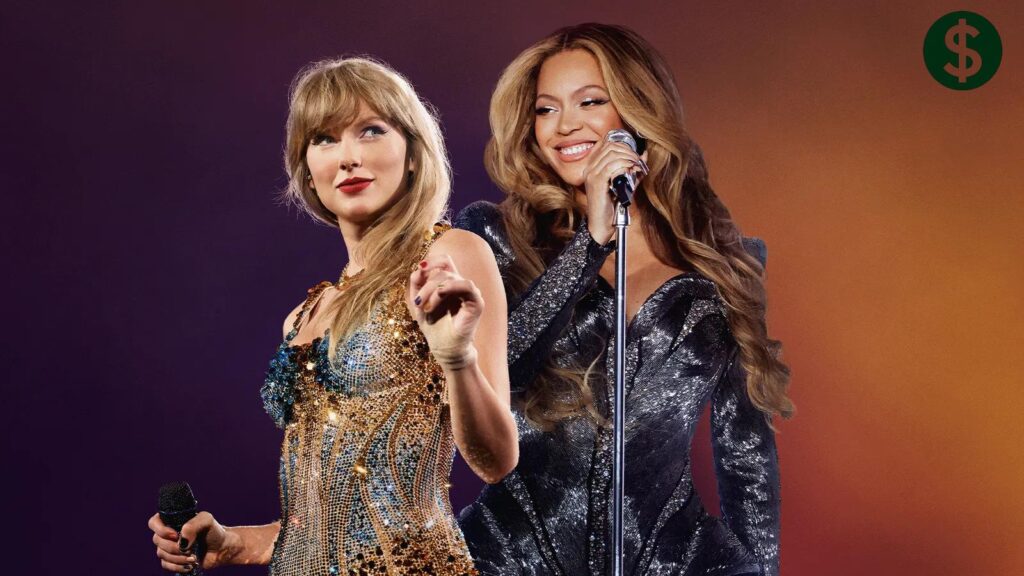
Beyoncé’s estimated Taylor Swift Net Worth sits between $700 and $780 million. While Queen B has diversified into fashion with Ivy Park and other business ventures, Swift’s music-first approach has proven more lucrative.
Taylor Swift vs. Other Pop Stars
Justin Bieber net worth is approximately $200 million after selling his 291-song catalog. Ariana Grande is worth an estimated $250 million. Miley Cyrus has accumulated $160 million.
Rihanna is wealthier at over $1 billion, but much of that comes from her Fenty Beauty cosmetics line, not music. Swift remains the richest primarily from music itself.
Future Prospects
Upcoming Album Releases
Swift announced “The Life of a Showgirl,” scheduled for October 3, 2025. Given her track record, expect multi-million first-week sales and another tour announcement.
With her master’s now owned, she may slow the re-recording project or pursue entirely new creative directions.
Potential Tours
The Eras Tour set an impossibly high bar. Any future tour will be measured against it. But Swift has repeatedly defied expectations, finding new ways to create spectacle and drive revenue.
Long-Term Wealth Trajectory
At 35, Swift is positioned for continued wealth accumulation. Her catalog generates passive income through streaming and licensing. Her business acumen has only sharpened with age. Reaching $2 billion by 40 seems not just possible but likely.
She could expand into production, artist management, or other entertainment sectors. She could invest in technology or startups. Whatever she chooses, she’s proven her ability to win.
